The Voice of Fashion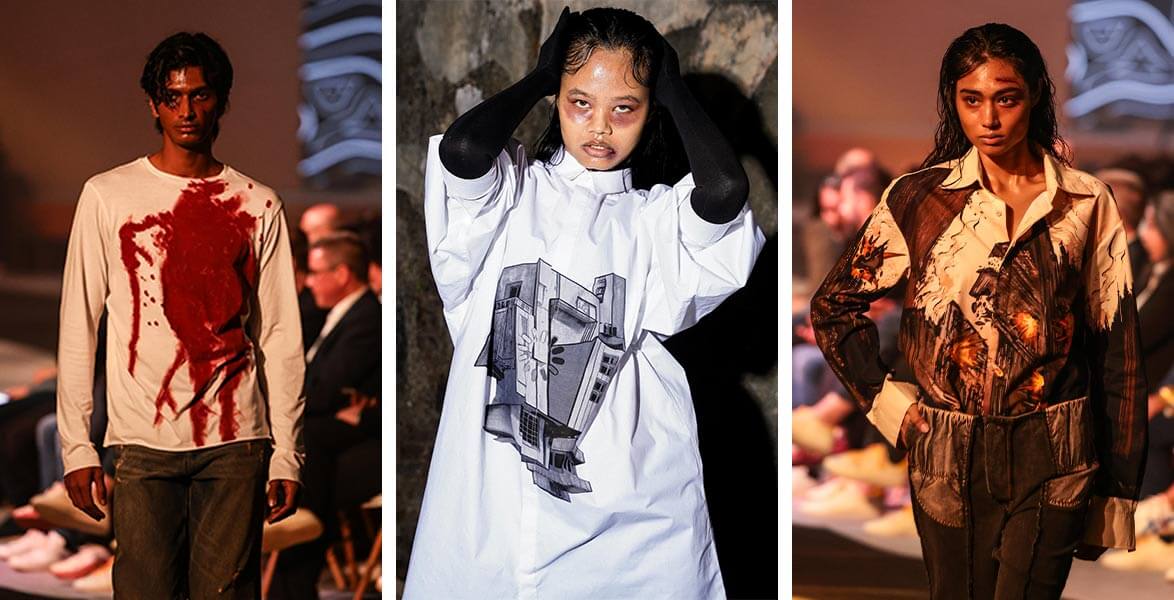
Simulated wounds on the runway, ambiguity online. Minus fashion’s prettiness. Pranav Misra reflects on the tension between artistic unrest and the risks of sending trauma-coded imagery on the beast called Instagram
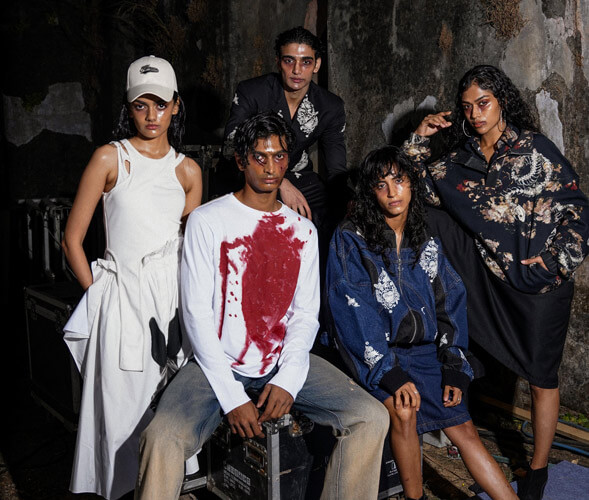
A few days ago, streetwear brand Huemn’s Instagram feed posted images from its recent Mumbai show: models styled with bruised faces, split lips, skin marked as if freshly wounded. Makeup used to suggest brutality and criminal assault.
The Spring/Summer 2026 visuals were unmistakably bleak, confrontational in their melancholy. For viewers encountering them without context—this writer included—they stirred anxiety, even aversion. The brutality was stark, amplified by the absence of captions that could contextualise what was going on. The disquiet was not built on the expectation that fashion must always offer beauty, idyllic landscapes, or the seduction of flowers, weaves and surface embellishment. It was the jolt of looking at violence stripped of explanation, in a medium where desire and consumer admiration are the usual points of entry.
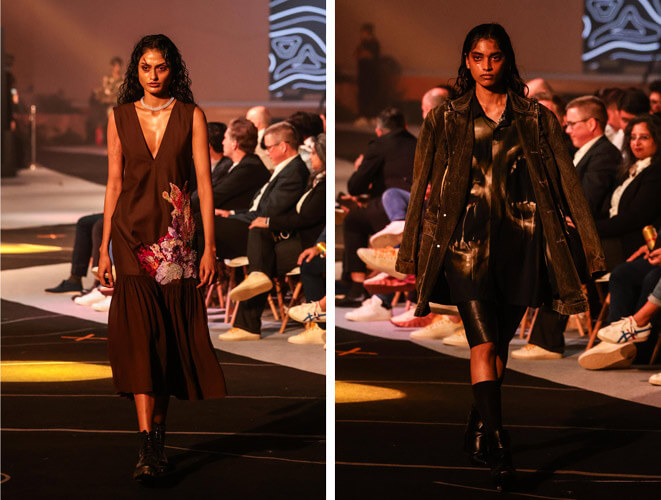
Printed cotton-poplin shirts, single-jersey T-shirts, and oversized fleece and cotton-terry sweatshirts populate the core of the collection. There were silk-crepe shirts with hand-embroidered motifs alongside dressy, printed organza skirts. The play of Lucknawi chikankari on dull colours (among the recognisable tags under some images on social media), diaphanous brown-black masks pulled over faces that did not disguise suffering, ghoulish prints with zippers on dresses, hand-painted, mud-washed denims, some with ombré finishes, raw-edged leather works on bombers, and longline blazers evoked curiosity. Which kind of customer is looking for these clothes and how will that consumer style them within the complex “human” condition of revealing and concealing one’s fears and rage?
The In-Huemn Runway
Instead of offering a one-sided opinion on the risks of releasing imagery that might unsettle those carrying memories or consequences of violence—physical or otherwise—I chose to speak directly to Pranav Misra, the designer and co-founder of Huemn. To understand the uneasy terrain, he had stepped in as the creative lead of the brand. Not because fashion designers must avoid melancholia, but because any creator who chooses a medium owes responsibility to it.
A poet and artist by self-description, Misra took my questions in the spirit of a meaningful debate. He first pointed out that viewing the few images on the brand’s Instagram handle in isolation, without having followed the narration at the show in Mumbai, would be a mistake. He spoke of his angst as an artist, the suffering and struggle he felt as a person and as a citizen of a ruptured world. “I do not think that as an artist I am obliged to send out beauty just because I am in fashion. What is real is beautiful. And it is not just the makeup that might be bothering you…the facial bruising is just one dimension. Everything from prints to embroidery and other effects represent the unsettlement I feel.”
At the show, the 14-year-old brand Huemn sent out 46 looks on models walking a 300-metre ramp. The narration began with focus on a young girl, eight or nine years old, as a violin played a melancholic tune. At the head of the ramp, says Misra, a mountain-like man stood. For the girl, the figure may have been like a wave crashing at sea, he adds, explaining the entire narrative of what he intended was felt on the ramp.
“Interpreting the collection without runway references only through Instagram images dominated in impact by makeup, mud, wounds, would be like isolating one instrument in an orchestra to judge the entire musical rendering,” says Misra.
“I do not think that as an artist I am obliged to send out beauty just because I am in fashion.” Pranav Misra.
The Human Condition
This is not the first time that Huemn has sent out its ponderous design philosophy wearing fashion. The label created the Devil Wears Huemn collection in the past, as well as the Huemn Blood Washed hoodie or the unisex T-shirt with “Everyone Sucks” written all over it. Horns, blood imprints, bold and loud phrases, form the ecology of design for Misra.
The grave suffering of human existence, especially in the current moment of war, unrest, violence and vulnerability, in many ways, remains Misra’s language. “My design philosophy echoes with socio-political unrest and I do not have the interest or ability to write long explanations or spoon-feed my audiences.”
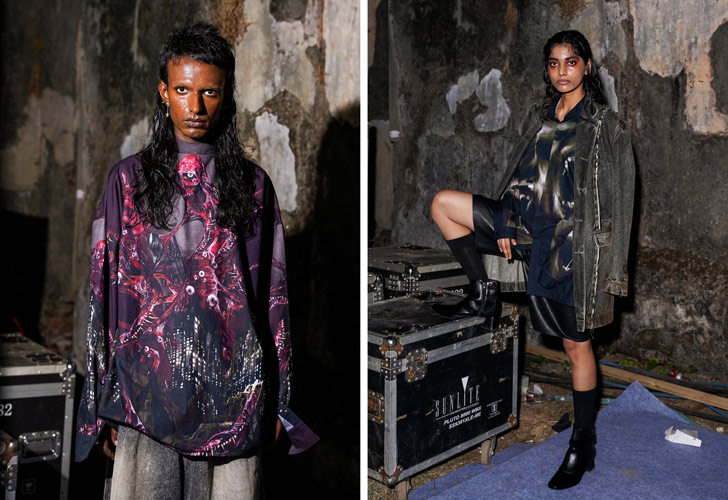
Quoting British-American filmmaker Christopher Nolan (who he calls his hero), Misra says a creator must not over explain himself. A poet like his father, he believes that if an artist’s work does not stir a feeling or thought, without a caption or context, it has slipped. “The wounds explicit in the makeup are just the surface of the social violence. I am aware that men and women watching these visuals will react differently. And it is not physical violence. Pollution, taxes, asphyxiated breath…the other injuries around us are equally bruising.”
Arguing that the slogan T-shirt is an easier way to depict internal and external suffering, he uses embroidery from his hometown Lucknow and other materials, techniques and pattern-making to depict social violence and centre a moot question—why does fashion want to make everything pretty?
The Distracted Beast Called Instagram
Yet, the tension remains. Instagram is not a runway; it is a fast, distracted arena where images are devoured without patience or nuance. It is not an arthouse or a gallery. Fashion has no obligation to beauty, but when it is sent out on social media, it risks the flattening of meaning. When faces of simulated violence created with hair and makeup appear without context, they can land in a volatile space—as viewers browsing around, carry their own histories of harm or vulnerability. Misra may argue for ambiguity as part of his practice, but as the algorithm hunts its prey, the “wound” of socio-political violence (or personal trauma) can easily get detached from the narrative.