The Voice of Fashion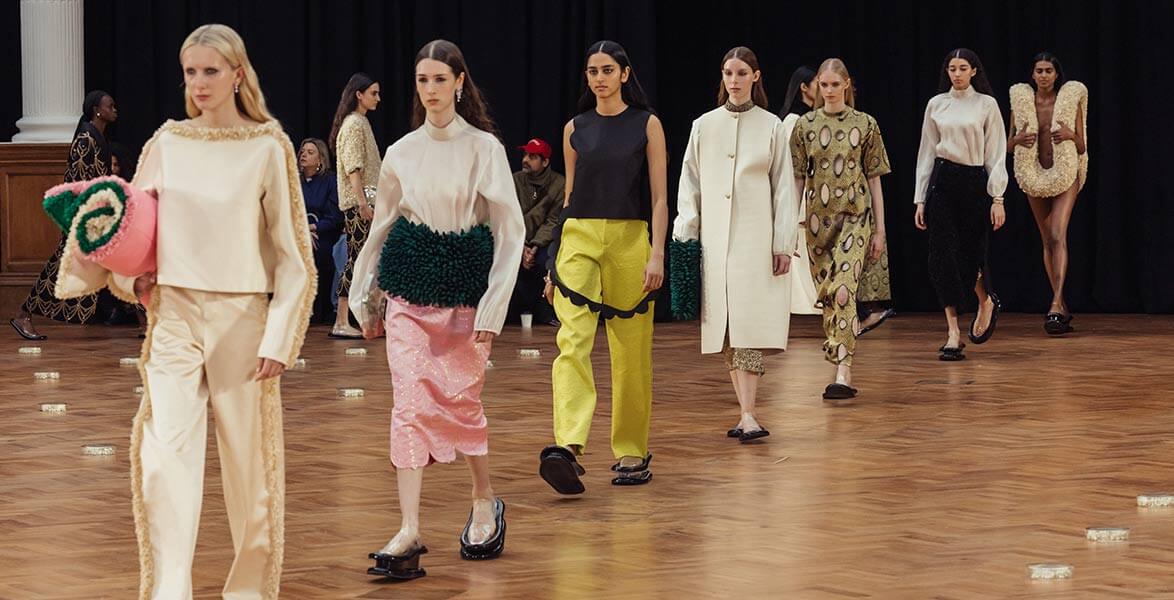
It Is Not About A Flower—Raw Mango’s first collection at London Fashion Week—is not a study in minimalism but in inheritance. It urges fashion to rethink what restraint from India looks like, and why the absence of embroidery or spectacle alone does not make fashion minimal
London Fashion Week has grown used to applauding India through spectacle—embroidery dense enough to photograph well and look great on NRI bridal aspirants, colour loud enough to travel across continents and phone screens. Or nostalgia legible enough for export; else what use or fun would India be. So, when Sanjay Garg’s Raw Mango arrived yesterday, February 23, with garlands instead of embellishment, exposed torsos instead of styled modesty, and saris that refused to behave within the tired binaries of “traditional” and “modern”—(come-kill-me souvenirs of fashion-culture writing), the instinctive response was predictable: minimalism. It is an easy word, even flattering, given that our tallest export variety designers, from Manish Arora, Sabyasachi Mukherjee and Rahul Mishra to Gaurav Gupta and Vaishali S revel in some form of excess.
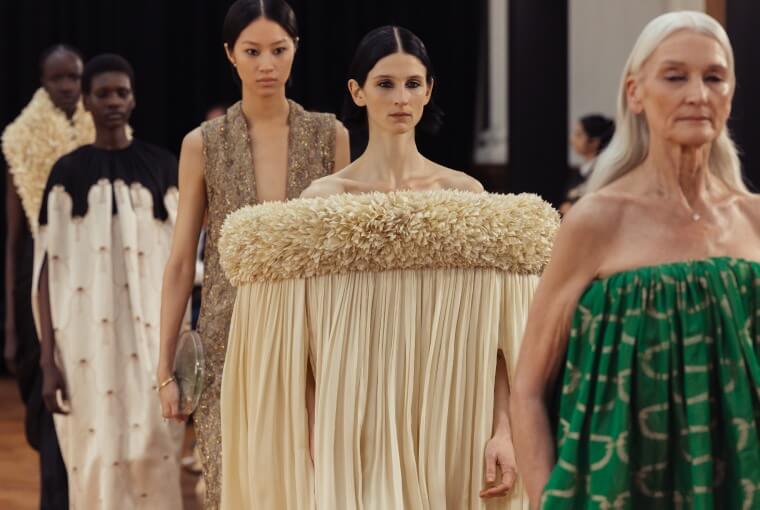
But It Is Not About A Flower is not an exercise in reduction. It is an argument about inheritance. Rooted in Garg’s personal admiration for flowers, yet refusing the predictable “let’s do florals from India” formula, the collection arrives with unexpected novelty. It does not decimate allure, mystery or myth, something minimalism often tends to do. At least in fashion.
The London Moment; the Indian Gaze
Raw Mango’s debut at London Fashion Week came with the familiar excitement among viewers and media at home reserved for Indian designers stepping onto global platforms. The applause often begins before the clothes are fully seen. We turn into adolescents, bursting with pride. Pride travels quickly—infectious, and is often deserved. When scrutiny returns, the question worth asking is not simply why London audiences or British Vogue noticed, but why we are so eager for it to.
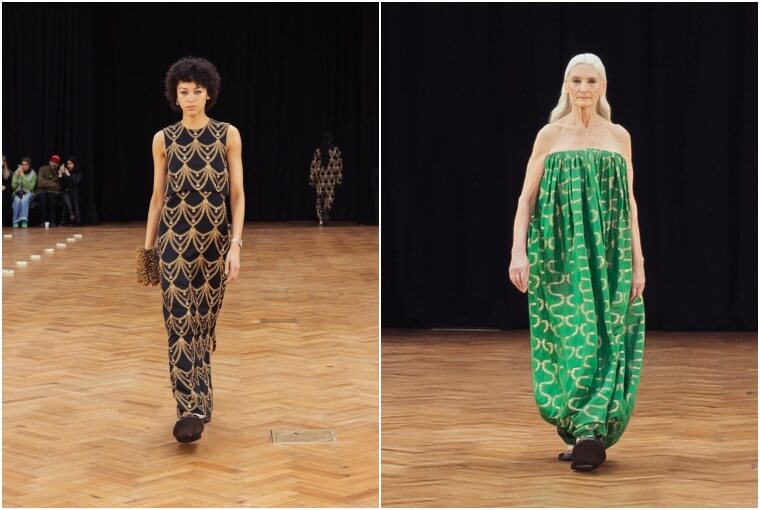
Perhaps because what Garg showed was neither straightforward ready-to-wear nor comfortably couture. There were good old saris too, which looked like good, new saris. There were architecturally structured clothes emerging from handloom experiments he has pursued before. Core DNA, unflinchingly.
At the centre of the collection sits the garland—or “not a flower”—ubiquitous across South Asia, instinctively loved in India, yet rarely examined as design intelligence. In temples, weddings, funerals and political ceremonies alike, garlands symbolise relationships. They are offered, received, placed and then removed. They honour and they mourn. Garg collapses the distance between ornament and garment by allowing this ritual object to become structure itself. It becomes a pattern, a labour-intensive, hand-made exploration (he is careful to emphasise that he does not want to exoticise handmade labour from India). Petals gather into collars, skirts and coverings; held like towels or book wraps, decoration ceases to decorate and begins to construct.
Minimalism in fashion removes excess. But here, meaning accumulates layer by layer.
A garland is never singular. It returns through repetition—many flowers threaded together. When worn as clothing, models carry plurality, even when the top note appears restrained. The wearer seems surrounded by invisible participants: the onlooker, the devotee at a temple, the mourner imagining the black garland, the celebrant.
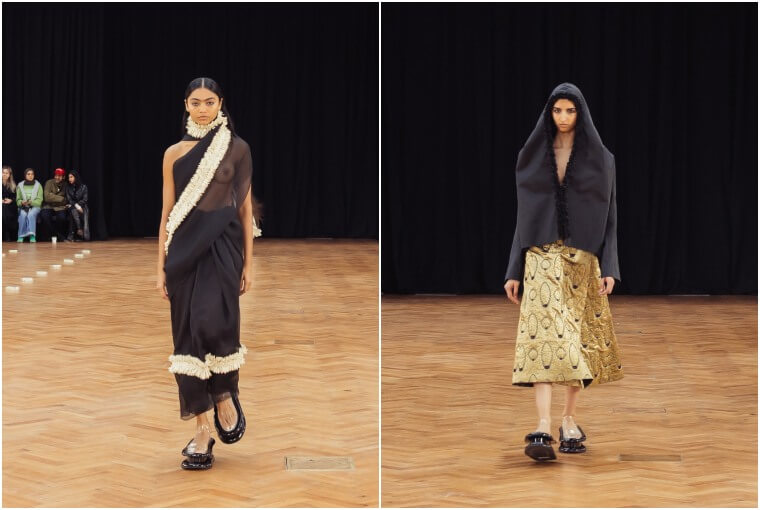
The body, too, in Garg’s rendering—read from afar through photographs and brief previews in Delhi—refuses neutrality. The absence of blouses beneath translucent saris, a nipple visible in one image, is not provocation. It is modern sensuality walking alongside other casual ways of wearing life and the world. Neither interpretation holds for long. The stitched blouse itself has been a relatively recent negotiation within sari draping anyway, shaped as much by colonial intervention as by changing urban fashion. Garg’s decision to remove it is not rebellion, it is just bringing an idea back. Breasts appear neither staged nor concealed. They simply exist.
While minimalist interpretations in fashion tend to sanitise the body, these silhouettes grow heavier as the collection progresses. Layered wraps, dense petal constructions and exaggerated coverings resist the sleek anonymity associated with minimalism. Restrained colour punctures—a sudden yellow, a roll of pink, a saturated green—do not induce calm; they interrupt it.
‘It is Not About a Flower’ suggests something else: that restraint, in Indian fashion vocabulary, may not be about less at all.
Runway Ideas and Market Clothes
Fascinatingly, in many readings of Garg’s work—particularly this collection—the absence of embroidery has become as seductive a signal as its presence is in the work of other designers. But before we celebrate restraint from India, it is worth remembering that not every refusal of spectacle is radical. Sometimes it is simply repositioning.
Which raises the more practical question: who is this collection for?
Presented within a ready-to-wear calendar, several looks seem closer to couture offerings than ready garments. A body wrapped primarily in garlands is an idea before it becomes a purchase. The blouse will invariably return; cultural codes decide differently across geographies, and commercial negotiations always do. And they must. Designers propose through exaggeration what later settles into wardrobe logic. Garg understands this. He has long treated the runway as argument rather than inventory—not merely a preview of what you will find in his stores.
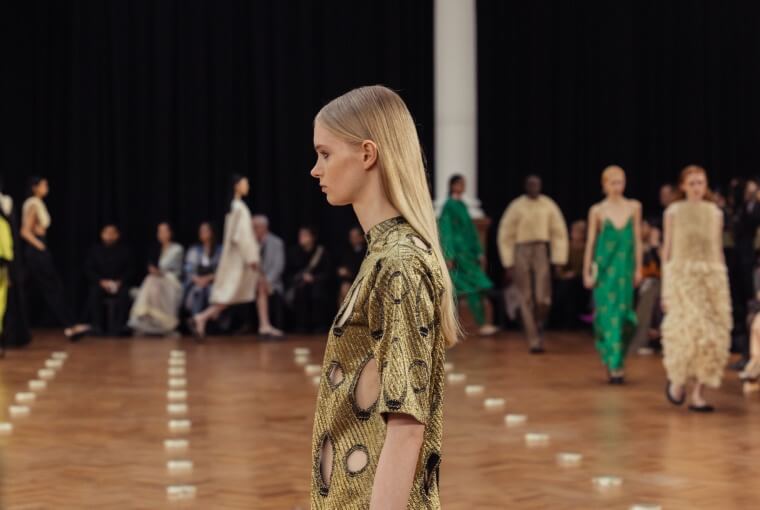
One of the aspects where the collection becomes genuinely compelling—besides its hugging skirts and tops punctured with hole-like openings—is its continued reframing of the sari, a project Garg has pursued for years with persistence. Rather than treating it as nostalgic costume or bridal inevitability, he invents, reinvents, folds and unfolds ways to keep it alive. Poetic and staid at once. Drapes extend into coats, volume travels across the torso. The unstitched cloth becomes architecture,most lovely when it drops sentiment altogether.
In London, this mattered because instead of explaining India through recognisable excess, Raw Mango allowed open readings into its life and times.
Fashion calls this minimalism because spectacle is absent.
But It is Not About a Flower suggests something else: that restraint, in Indian fashion vocabulary, may not be about less at all.