The Voice of Fashion
India’s crafts renaissance is real, and so is the rush to cash in on it. In this special issue, TVOF asks how craft should be written about and promoted, and how India can work through what is at once a pilgrimage and a pilferage
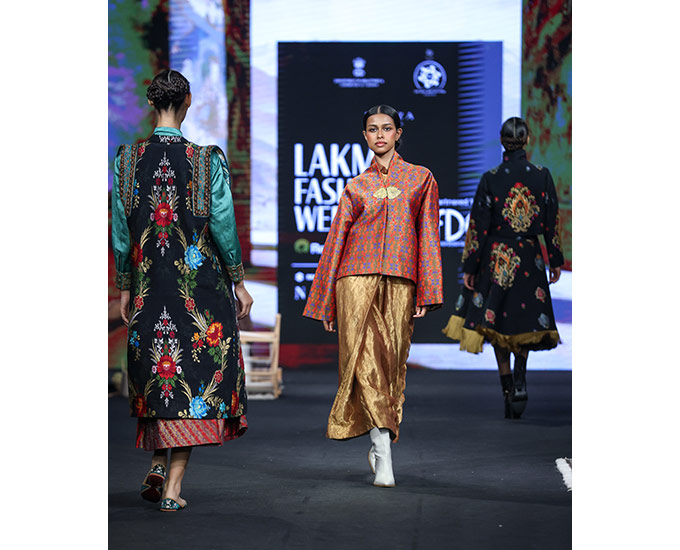
There is barely a room in India this year that does not want to tell you about something handmade or artisanal. You hear it on fashion week runways, in a mall atrium’s festive installation, at pop-ups everywhere and in sixty thousand 60-second reels. A weaver’s fingers on a loom, a dyer knee-deep in indigo, an embroiderer’s needle moving through a kantha. Craft has become the story everyone wants to tell.
India is going through a genuine crafts renaissance. You can see it in craft’s growing ties with art and fine art, in museum exhibitions of textiles curated with pedagogical and contemporary rigour, and in the institutes, patrons and buyers backing craft in every way they can. From Sunday, November 1, for instance, Pampa: Textiles of Karnataka launches at Bengaluru’s National Gallery of Modern Art (NGMA). Presented by Lavina Baldota of the Abheraj Baldota Foundation, Pampa traces 400 years of textile history, from the 17th century to today. It brings together more than 150 textiles, garments, artworks and installations into conversation across historical collections and the work of contemporary artists, designers and master weavers. Objects, people, places have been braided into its curatorial expression.
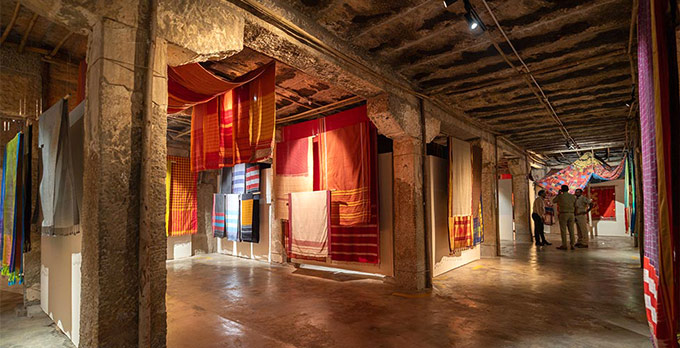
Homegrown luxury is finally being judged by the intelligence of its making. And the finely curated exhibitions of the past seven or eight years have shown Indians what making in India, its textiles and its skilled karigars, is really about. That several have been held in places like Hampi and Paithan, close to the artisans’ own homes, shows that a newer, wiser and more equal relationship between makers and curators has opened up.
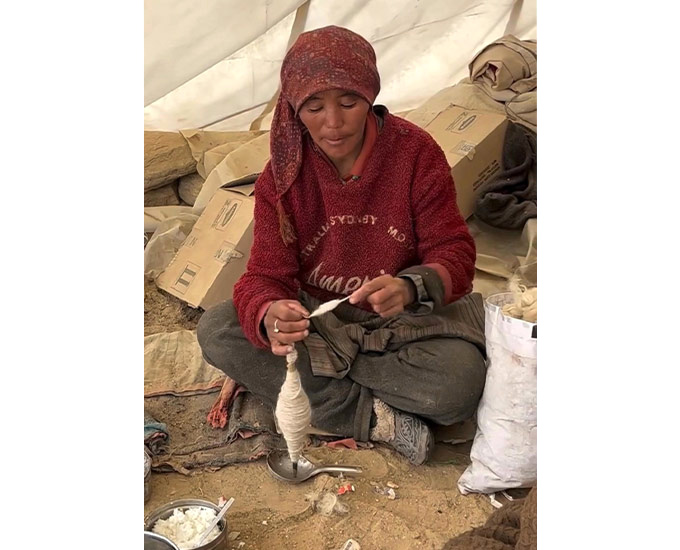
Designers are building long-term collaborations with artisans and clusters instead of one-season visits. There is real inventive thought and intervention, not just nostalgia and lament. 200M Artisans, which bridges knowledge, network and capital through collaborative platforms has put the heft of data and future potential, including technological, towards the business of the handmade. Craft organisations are doing slow, unglamorous work on fair wages and design education. Young makers are inheriting their families’ skills on their own terms. Hayat Gutti, a third-generation artisan of Kalamkari batik from Ujjain, and a digital award winner who features in TVOF’s ongoing collaborative series with the Digital Empowerment Foundation (DEF), makes the point.
This is the revival of revivals. Since we launched in 2018, TVOF has documented it, argued for it and celebrated it.
Pilgrimage and Pilferage
A renaissance is also a market, and every market draws a crowd. Where there is a crowd, there is bound to be a blur.
Craft bazaars, large and small, remain the original home of the sector’s evolution. And storytellers, retail campaign makers and Instagram resellers all want a piece of the pie now. Artisans themselves sell directly, and that democratisation is welcome. Much of the rest is not. Craft has become a word that sells, and words that sell get stretched until they stop meaning anything. A screen print passes as handblock. A machine-made border is sold with a handloom story. A cluster’s name appears in a campaign while its makers stay unnamed and are paid the same as before. The term “handcrafted” shows up in a caption with no record of whose hands.
Pilgrimage and pilferage are travelling together, on the same cart. One goes to the source to learn, and stays. The other goes to collect, borrows the meaning, and leaves. Craftwashing has become fashion’s new greenwashing. It takes the noble glow of the handmade without taking on its obligations: knowing the maker, paying for time, crediting skill, and accepting that real craft is slow, imperfect and limited.
The risk is not that craft is ignored. The risk is the opposite. When everything is craft, nothing is. The word blurs, and with it the truth of where something was made and who made it. For traditions that have barely survived neglect, surviving as a backdrop may prove harder still.
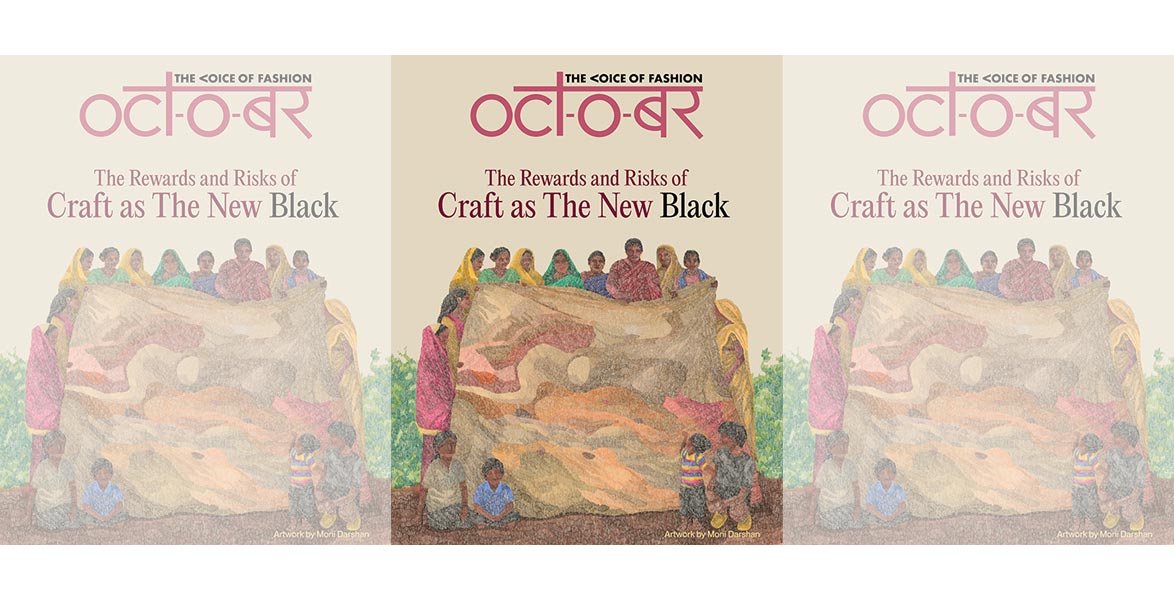
When our team began discussing this issue more than a month ago, the easy route was obvious: an issue celebrating the boom, with its exhibitions, sales and launches. We argued about it for days. In the end we chose to hold both truths at once, the reward and the risk, because a magazine that only applauds is not doing its job. Hence our coverline: The Rewards and Risks of Craft as the New Black. “The new black” is fashion’s oldest compliment and its most dangerous one. Every new black eventually goes out of style.
The cover artwork is by Aparna Patidar, a young illustrator at Morii Darshan, the Ahmedabad-based studio of designers Brinda Dudhat and Kabir Yadav, where craft breathes for all the right reasons across all seasons. The makers are not in the background of their own story. They hold the cloth up, and without them it would fall. At their feet sit their heirs—they symbolise the question this issue keeps returning to: who will inherit this, and on what terms? Will they inherit a living skill that pays and is respected, or a beautiful story that others profit from?
Two stories reported by TVOF writers anchor this issue. One is by Kimi Dangor on the genuine crafts renaissance, which deserves to be acknowledged and honoured. The other is on craftwashing by Anannya Sarkar. Three columns bring argument and perspective from significant names in the ecosystem: David Abraham of Abraham & Thakore, Pavitra Rajaram of Nilaya Anthology and Yosha Gupta of MeMeraki. Ten voices from across arts and crafts weigh in too. They don’t all agree, and we didn’t ask them to.
I have one request of you as a reader, a buyer, a designer or a brand: look harder. Ask who made it, where, and for how much. Ask whether the story on the label is true. The handmade deserves our devotion. It also deserves our scrutiny.
This is my last special issue as editor of The Voice of Fashion. “Over nine years here—including the year we spent building TVOF—and many special issues, I have tried to make these letters say something rather than simply introduce an issue. It feels right to end with craft, the subject that taught me most about the spine of Indian fashion.
Thank you for reading, and for arguing back.
Banner: Digital cover for Oct-O-बर. A photo of Sujni artists from Bihar holding an embroidered panel, illustrated by Aparna Patidar for Morii Darshan.