The Voice of Fashion
A conversation with Marielou Phillips and Matthieu Foss of Deeya Paris on curating contemporary Indian design for the French capital and a growing international clientele
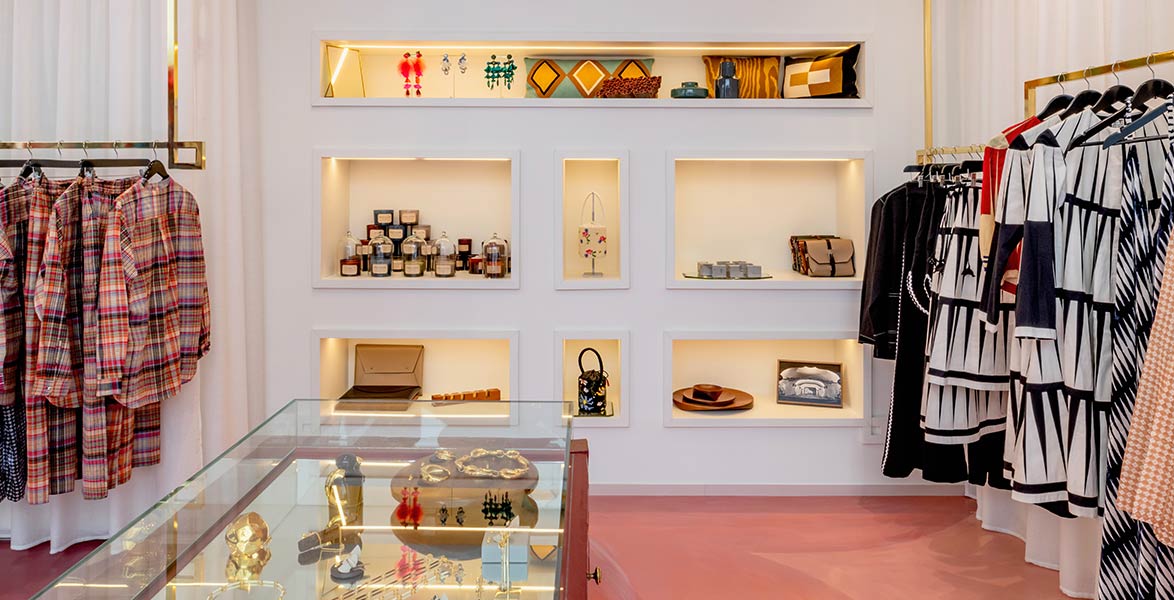
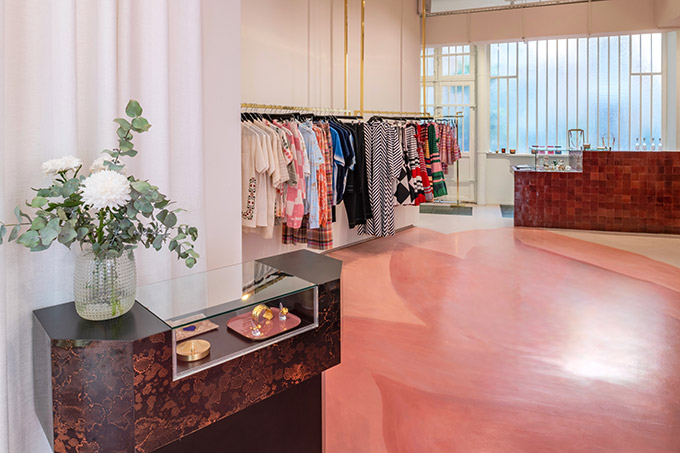
On rue du Bourg Tibourg, in the heart of Le Marais, one of Paris’s most vibrant neighbourhoods for style and contemporary culture, Deeya occupies an elegant space amid independent boutiques, galleries and cafés. This July, I walked in, tolling the ghungroo on the door, into a space that spoke Indian design in a distinct French accent. Deeya uses all the familiar propositions of Indian style—colour, mood, jewellery, clothes and textiles—but allows them to breathe. Not by necessarily dulling down the colours, but by toning down individual statements through the spacing of visual merchandise and distributing the emphasis between the merchandise and the space itself. At the front, the window display conveys India more through control than audacious skidding; towards the back, a private garden opens out.
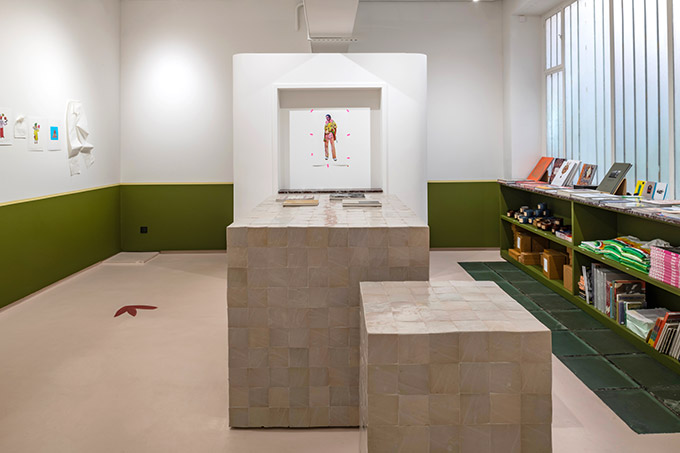
Founded in 2023 by Marielou Phillips, a former Chanel model and later the brand’s representative in India, and Matthieu Foss, whose background is in photography and the art market, Deeya positions itself in the mid-luxury segment. But its proposition extends beyond fashion and retail. A dedicated gallery hosts exhibitions, photography, artist collaborations, book launches and conversations around India’s contemporary creative scene. Deeya’s shelves carry a selection of books on India, art, architecture, textiles and design, including limited-edition photobooks. It is an India that has been edited for Paris without being made to look French.
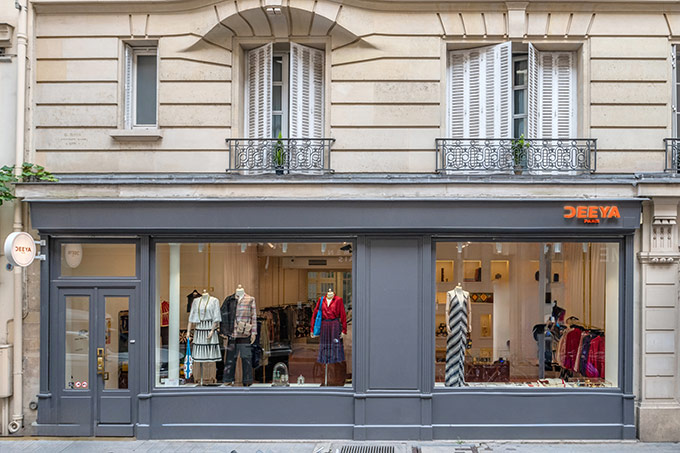
In this conversation, Matthieu and Marielou talk about lighting up their Deeya. Edited excerpts.
Your store Deeya feels less like a fashion store and more like a tightly edited cultural space. What changed in the way you think about luxury, and how did living in India for 15 years influence that shift?
Being Indian, I was always aware of the importance of craftsmanship and savoir-faire, but my years at Chanel gave me a deeper understanding of what those qualities represent when pursued at the highest level. It taught me to recognise and appreciate the extraordinary value of attention to detail, precision and the emotional connection that can be created through an object. It also shaped my understanding of luxury as something rooted in quality, time and meaning, rather than excess.
Moving back to India for 15 years profoundly expanded that understanding. I revisited India’s textile heritage, and what struck me most was that these traditions are not frozen in time. A new generation of designers is finding contemporary ways to work with craft, creating collections that feel modern, relevant and globally resonant.
Deeya was born from the observation that while India has one of the world’s richest craft traditions, the country’s contemporary fashion and design were still relatively underrepresented in Paris. The idea was never simply to open a boutique selling Indian fashion, but to create a space that offers a more complete perspective on the country today through fashion, jewellery, objects, photography, books and exhibitions.
The greatest luxury is knowing where something comes from, understanding the hands that made it, and choosing pieces that have both lasting quality and lasting meaning.
“For some clients, discovering contemporary Indian design requires a small shift in perspective.”
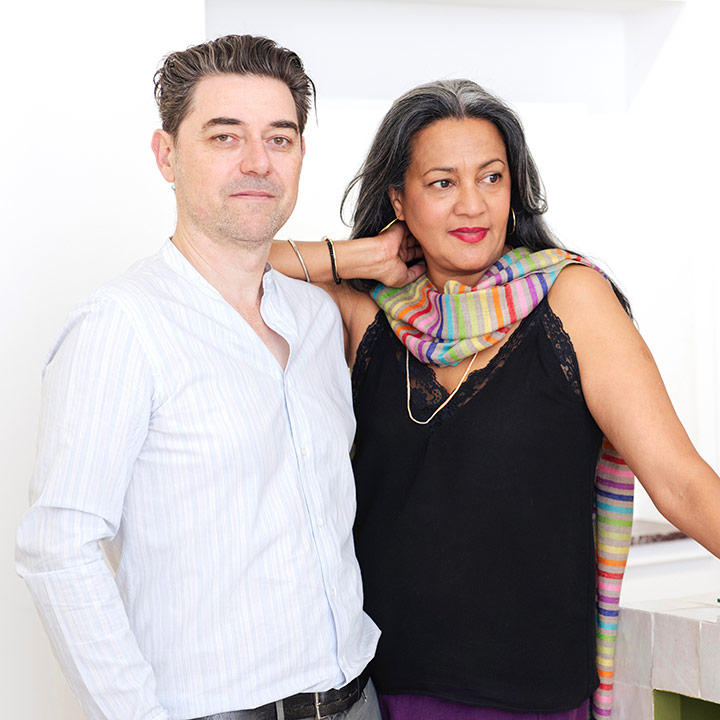
Walking into Deeya, what strikes a visitor is India without fuss. There are no clichés of maximalism, no theatrical displays of colour or ornament. Was that an intentional way of presenting India to a Parisian audience?
Absolutely. From the very beginning, our intention was to present a different perspective on India—one that reflects the incredible diversity, sophistication and evolving creativity we experienced while living there, as well as the importance of personal style. Rather than focusing on a nostalgic or folkloric image of India, Deeya reflects the India of today—daring, entrepreneurial and diverse, where heritage and craftsmanship continue to evolve through a contemporary lens.
There is often a tendency outside India to associate Indian design with excess—vibrant colours, heavy embellishment and ornate displays. While the aesthetics certainly exist and are part of India’s rich visual culture, they represent only one facet of it. We wanted Deeya to reveal another side that is understated, refined and deeply rooted in craftsmanship.
Many of the designers we work with reinterpret traditional textiles, embroidery or weaving in ways that feel relevant to an international audience without losing their identity.
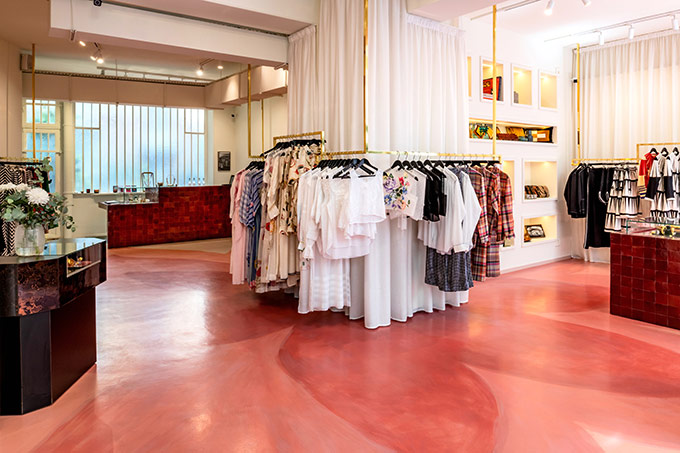
What about the use of architecture and design—Moroccan handmade tiles, vintage furniture, the three shades of pink on the floor, the window dressing, a ghungroo on the door—to create your interpretation of India?
Design was an important part of creating the atmosphere we wanted. We worked with a Franco-Indian architect who understood our sensibility and desire to create a dialogue between the two countries.
We shared a few key guidelines, including the idea of introducing subtle Art Deco references as a bridge between Bombay and Paris. This led to one of the defining elements of the space: our suspended brass racks, which combine functionality with a sculptural quality and create a sense of lightness throughout the boutique.
The large pink jasmine flower painted on the floor was executed entirely by a French artist. Its circular composition may evoke the spirit of a rangoli interpreted in a contemporary and abstract way. The display units and shelves are finished with handmade zellige tiles, chosen for their irregularity and unique ability to catch and reflect light across the surface. Their subtle variations, resulting from the artisanal production process, bring warmth and movement to the space.
We also incorporated vintage furniture, handcrafted elements and subtle references to India, such as the ghungroo (a gift from a dear friend) on the entrance door.
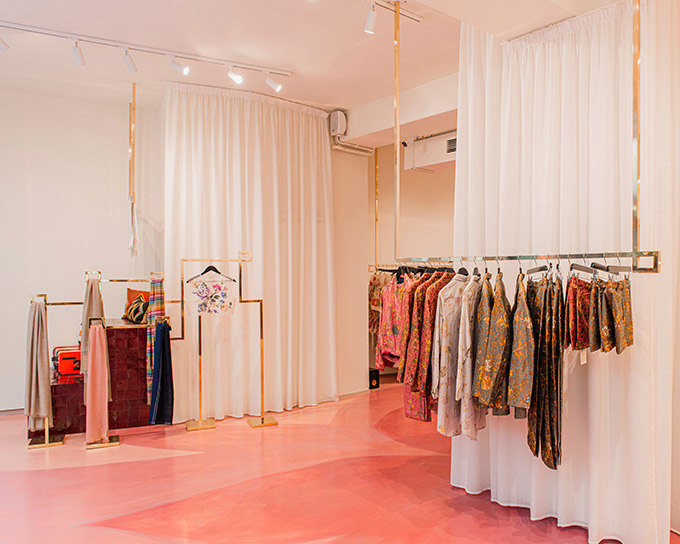
Then the designer paradox. Some labels stocked at Deeya produce entirely in India, drawing on the country’s craft and textile traditions, yet are not available in the Indian market. How did you shortlist the few you represent?
Part of our mission is to introduce designers who may already have recognition in India, but remain relatively unknown internationally. We see ourselves as a platform for discovery. We also work closely with several designers to ensure their collections resonate with our clientele in Paris. These are never fundamental changes to their creative vision, but thoughtful adjustments—refining proportions, adapting sizing, shortening skirt lengths, reducing the amount of embroidery on certain pieces, or selecting specific colours and fabrics.
It is interesting to see that the collections created for international markets can sometimes be quite different from those primarily intended for the domestic audience.
To name just a few, Suket Dhir is known for his mastery of weaving and silk brocade, as well as his exquisitely elegant evening wear; Ka-Sha for the distinctive graphic and geometric variations of her appliqué work; Naushad Ali for his minimalist silhouettes and playful use of traditional techniques such as crochet and embroidery; and Vineet Rahul for their signature watercolour-like block prints and intricate embroidery collections. Each has developed a strong and highly recognisable visual language, demonstrating the diversity of approaches within the particular group of designers we have chosen to represent at Deeya.
One of the comments we hear quite frequently from clients, including Indian customers visiting Deeya, is that they searched extensively in India but could not find the pieces we carry there.
We have also chosen to work with a few French designers like Mii and Jane Gustavsson who produce in India, creating a different type of dialogue between the two cultures. And some of them have limited or no presence in the Indian market itself, which further highlights the complexity of how fashion circulates internationally.
Over the years, what have you learnt about the European customer who walks into Deeya?
We have discovered that many of our clients are not necessarily seeking logos or status symbols, but a different interpretation of luxury. One where value comes from the comfort and quality of the textiles, the craftsmanship, the hand-finished details and the time invested in creating each piece.
For some clients, discovering contemporary Indian design requires a small shift in perspective. They may need time to become familiar with a different relationship to colour, patterns and graphics, especially when compared with the more restrained palettes and codes often associated with European fashion.
After almost three years of existence, we have built a loyal community of regular clients from Paris, but also many international clients, particularly from the US, South America and the Gulf. Some tell us that when they arrive in Paris, Deeya is the first shopping destination they visit. We also work closely with several personal shoppers who understand our vision and introduce their clients to Deeya when they are looking for something special.
You have lived and worked in Paris and Mumbai. What do you think each fashion culture (India and France) could learn from the other?
We have always felt that the relationship between the two countries is one of mutual admiration and exchange. Beyond the long history that connects our two cultures, there is today a renewed desire to work more closely together, both economically and strategically. At our own level, we feel this growing interest through the increasing dialogue between creative communities, designers, institutions and businesses.
When it comes to fashion, India’s presence and influence is growing every year. We see this through the increasing number of Indian designers participating in international fashion weeks and the growing recognition of Indian craftsmanship, textiles and creative talent on a global stage.
We believe France has much to share with India in terms of developing a strong luxury ecosystem, from brand-building and storytelling to the importance of creating a global identity around craftsmanship and design. France has a long tradition of celebrating savoir-faire and transforming craftsmanship into a cultural and economic asset.
At the same time, India has extraordinary things to share with France and the rest of the world. The depth of its textile heritage, the knowledge of its artisans, its ability to work with natural materials and its richness of techniques are truly exceptional. This can help bring a different perspective on colour, pattern, materiality and the relationship between tradition and innovation.