As Longform marks 25 years, this conversation with Neeta Raheja and Pareina Thapar looks at how PR has evolved from media relations into a powerful force in shaping brands, stories and public perception—and if independent journalism still figures.
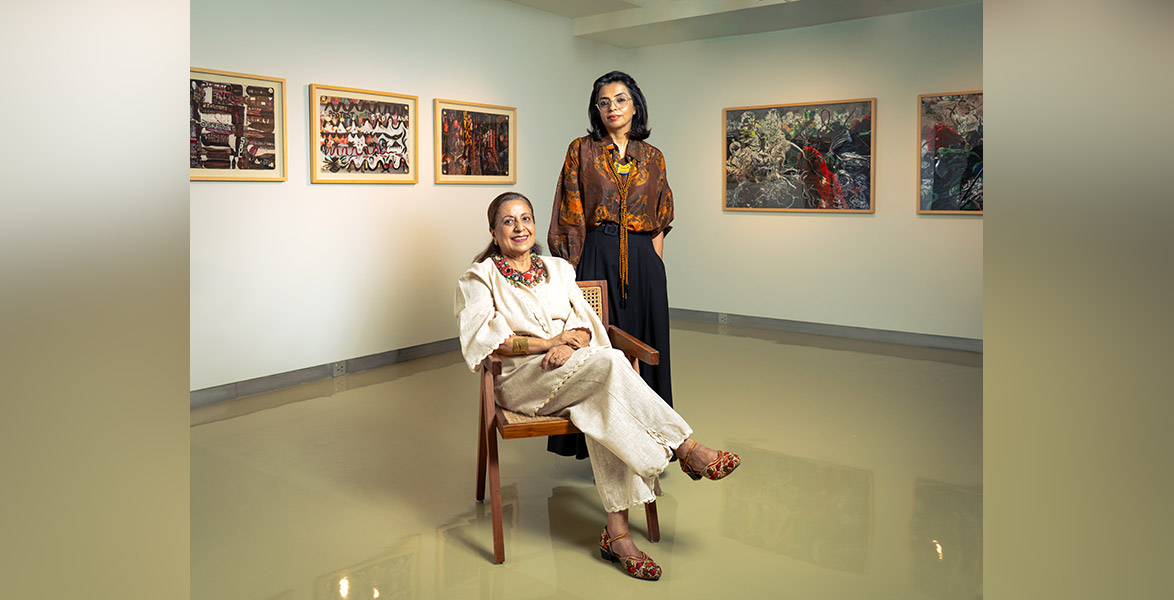
An afternoon at Latitude 28 art gallery in Delhi’s Defence Colony, the venue for this interview, came as a suggestion from the interviewees. Neeta-Pareina, as we call them.
We had requested formal wear for the photoshoot, both came impeccably dressed; no flamboyance. Both seemed faintly reluctant to pose for photographs; Pareina didn’t exactly say so, but seemed like she wanted the shoot to end quickly. Then they retreated to a backroom with me and my recorder—with coffees, cookies and other sinfully sugared eats.
A disclosure belongs here, rather than buried at the bottom of the story. Neeta Raheja and Pareina Thapar are people I call friends. Over two decades, we have shared many easy conversations and a few difficult ones about media, power and the business of visibility in fashion, beauty and art. That familiarity is precisely why this interview demanded sharper questions, not softer ones. In their respective roles, Neeta-Pareina, are among the most influential public relations professionals in India. This interview marks 25 years of Longform, the agency that began as Neeta Raheja’s Very Truly Yours before Pareina Thapar joined as partner. Over a quarter of a century, Longform has evolved into something closer to a strategy powerhouse, working across fashion, luxury, art fairs, hospitality and culture. Its influence lies not simply in securing coverage for its clients, but in helping shape what brands and institutions or cultural organisations want to tell about themselves.
“PR is no longer sitting across the table. It has a seat at the table,” Pareina Thapar.
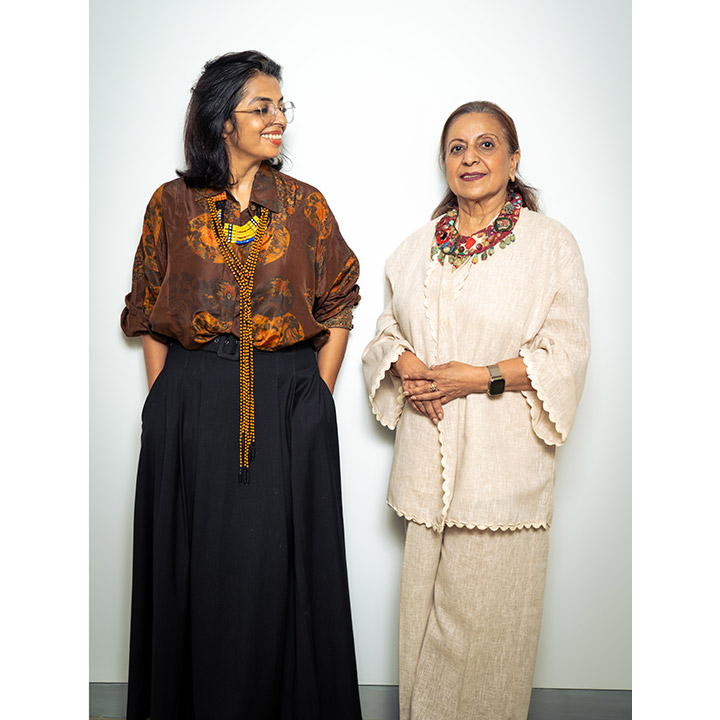
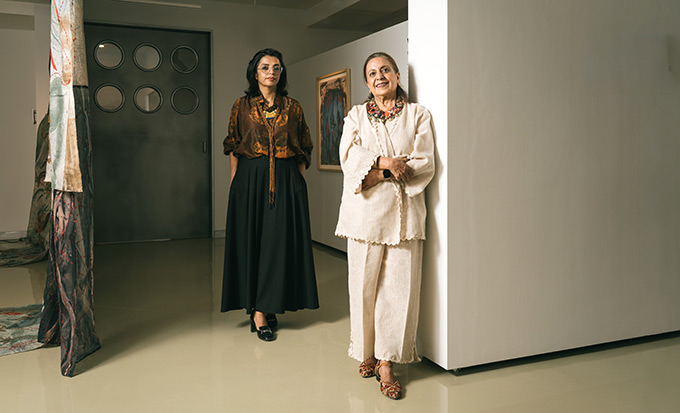
Pareina Thapar and Neeta Raheja photographed for TVOF.
More than half of Longform’s business now comes from outside Delhi, where the firm is headquartered. At any given point of time, they have around 25 to 40 active client accounts. But it would be simplistic to measure it by its employee count or client roster. There are a couple of other powerful PR firms in India, as well as individual brand advisers, who give Longform good competition; they too advise some of the most powerful and popular brands within and outside the country. Longform’s significance, along with that of other power brokers in PR, lies in the accumulated trust of having been invited, repeatedly, into the rooms where reputations are made.
After acknowledging the quarter century, this conversation moves onto the bigger picture: the powers and pressures, certainly, but also the growing co-dependence between PR and lifestyle media. Do editors still take firm calls in rejecting what arrives with photographs, captions, reasons and meanings already spelt out? Is objective reporting even possible when storylines—and several soft seductions—come packaged with access? And what happens when advertisers, sponsors, enablers and “journalists” become part of an increasingly difficult-to-separate ecosystem? After all, the gates are open. Wide open. On both sides.
Excerpts from a “longform” interview, edited for length and clarity.
Raheja and Thapar speak about the rapidly changing landscape of the industry.
When you began 25 years back, PR was mostly about media relations. Over the years, PR executives are strategists, publicists, advisors, crisis managers, brand managers. You sometimes help plan the businesses as well…At what point did your work start inflecting?
Pareina: For me, it was reverse. I did not come from a PR background, I crossed over from journalism at Business Today, and there was that empty space between understanding both sides. When I crossed over, from the very beginning, it was never just about media relations for me. That’s all those years back when Neeta asked if I would work with her. I knew her from the Ritu Kumar point of view (she was handling Kumar’s account). Even then, Neeta was never just “media relations”. She was a brand strategist. She paved that path for 15 years for the Ritu Kumar brand, including promoting Kumar’s book on costumes and textiles history of India.
Neeta: Right from envisioning textile-made costumes made by Ritu Kumar for Miss India contestants, to working from libraries at National Museum or Crafts Museum, to writing notes to assist the designer—is what we would do then. No designer sent us ready notes. It was complete involvement with the brand’s DNA.
So, what was media to you then?
Pareina: At Business Today, I had clearly understood that the press release must straight go into the dustbin. It was information, never the story. When I joined Neeta, she never told me either what a press release is. She just said, this is the story and we need to figure it out. Initially, I used to be lost in corporate communication mandates, maybe because corporate brands had this streamlined approach. Whereas I was figuring out that it was all about understanding and communicating a story.
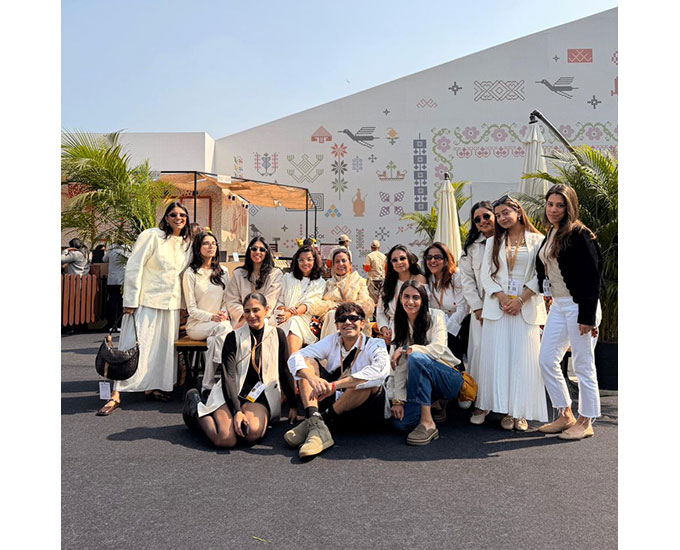
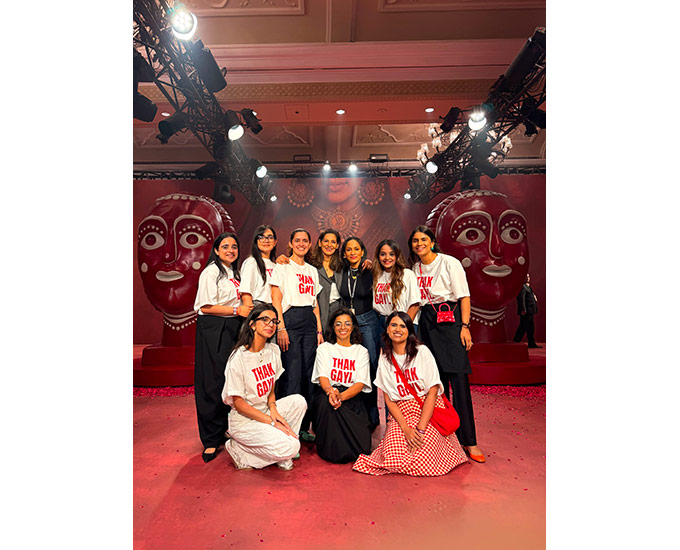
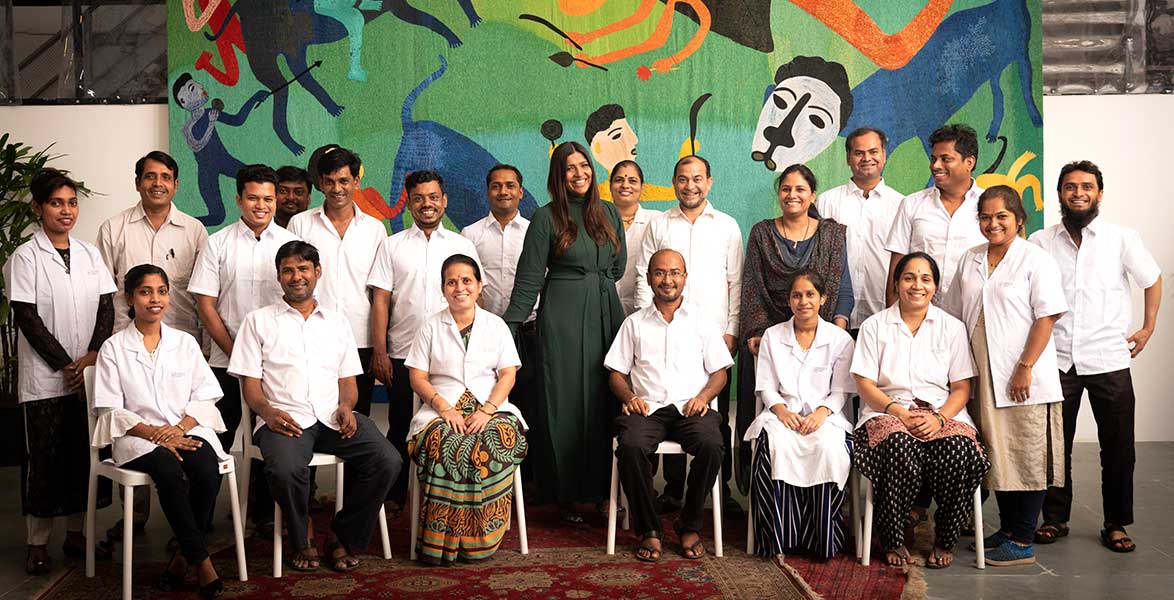
Thapar and Raheja with the Longform team at India Art Fair.
Some editors say PR people can be very intrusive. Several PR companies say journalists are completely dependent on them. Where do you stand?
Pareina: We are the compass. Now, who has honestly created this ecosystem of such acute co-dependence, it is hard to say.
Neeta: When I started out with Very Truly Yours, PR was a very nascent profession. The relationship between media and the client and PR executives was not really defined. Whatever PR that did exist was more corporate. Government associations, Indian Oil, for instance, had PR communications. Not lifestyle brands. When I returned to India (after a marketing course at Columbia University), I put out the word that I was setting up a niche lifestyle PR agency. I got a lot of replies, even from friends who were already running powerful labels. But I had this vision that I did not want to be just a PR person but someone who was part of the brand story. The co-dependency you talk about now is maybe because the industry has evolved considerably.
Where does the power really lie? Sometimes it seems to me, especially with younger journalists, that it is the PR people who are their backend editors.
Pareina: PR is no longer sitting across the table. It has a seat at the table. Media itself has gone through so much change. But everybody still wants the original voice of a journalist.
But isn’t access journalism more the norm? Brands send gifts to journalists, fly us to fine destinations, we are wined and dined … Who is really in a position to write an objective story?
Neeta: One thing is that there is a certain equity every brand should stand for and there are hygiene factors to treat guests well. The real ethics of journalism comes into play if a substandard brand takes you for trips and indulges you because it has money but doesn’t have a story. How should you report then? Is a journalist still supporting a substandard brand because it has hosted you in a luxury hotel and exceeded in hospitality? It’s a question the media must ask itself.
Pareina: About gifting, we do it very thoughtfully, very cautiously, because one can do great disservice to the brand by extra gifting.
At designer Masaba Gupta’s ICW showcase.
What about dressing journalists for shows? Why can’t designers be advised against it?
Well, it works both ways. There are media people who request to be dressed. My point is this, if the customers can be dressed it’s a great idea. For journalists, they have to look out for it themselves. And I think it is changing a bit: I know more than a few journalists who do not really wish to be dressed in the designer’s clothes every time.
How do you decide who you will represent and who you won’t?
Neeta: We never work only for money. Every day some jeweller, industrialist a rich designer or someone wanting to open an art gallery may call us. People who think money can buy everything expect us to be at their service if they are paying for our air tickets and our fees. But we draw very clear boundaries.
Pareina: You are asking about ethics. Here are ours: we first ask if the brand has something to say? Even when a brand has a very good story, if we are already working with someone in the same segment and representing a client with a similar narrative, we don’t mix it up. The second thing is we look for synergies. Earlier, when we really respected a brand but did not have the best chemistry with the people, yes, we would suck it up and be a little objective. That’s not the case anymore. For one, as Neeta says “we have earned our stripes”. We look for all aspects to sync now—synergy, chemistry and respect. We may get the recipe wrong at times but once you put your foot down internally on more filters, then eventually there is less headache through the process.
Finally, our most important filter is: where is our growth in this? If you become an echo chamber for yourself, then that’s your decline. Previous
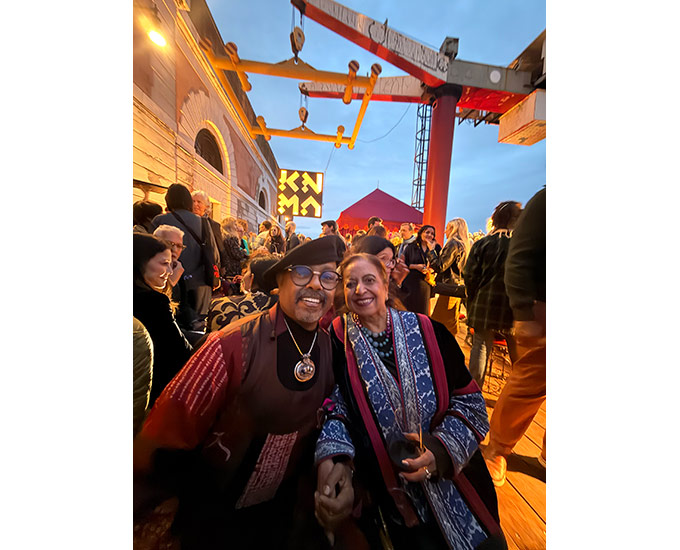
Raheja with artist Paresh Maity at Venice Biennale 2026.
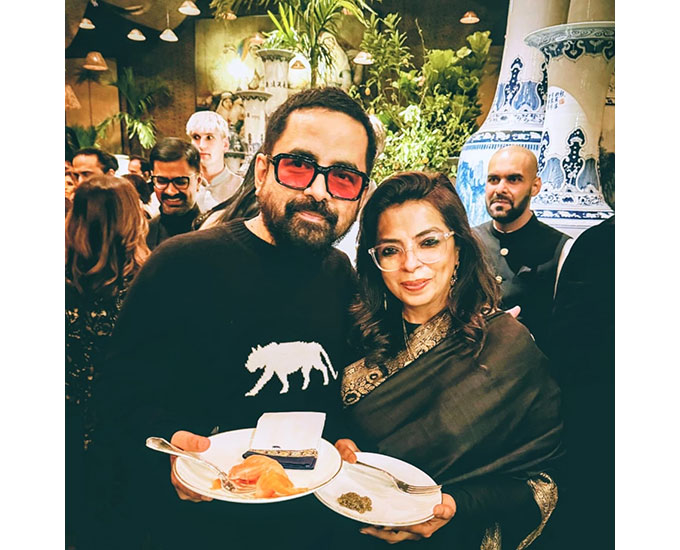
Couturier Sabyasachi Mukherjee with Thapar at his label’s 25th anniversary celebration.
Who are PR firms accountable to? There is no body that governs this industry after all.
Neeta: It is an industry of crisis management, strategy, leading the brand voice. It all starts from personal ethics. If somebody has to explain to you what is right and wrong, you are absolutely the wrong person in any case.
I am not talking about small mistakes in communication. I am talking about long-term responsibility.
Pareina: I feel that has been the problem with the PR industry from the beginning. Because if public relations are meant to be that a client can be doing whatever, yet my job is to make them look good, it is a wrong conversation to begin with. My problem with the public relations industry in the initial days was also its attempt to buy opinion completely but want journalists who they really respect for their strong editorial voice, which is a space of advertising or an advertorial. Let me give you another example: we have worked with a huge, iconic brand, which we realised over the years was not getting everything right in terms of sustainability—the line they were promoting as their distinction. We withdrew from the association. We are accountable for what we ourselves filter out. We must educate our clients instead of letting them use us. But you are right, there is no body to hold us to our responsibility unlike for chartered accounts or even the media.
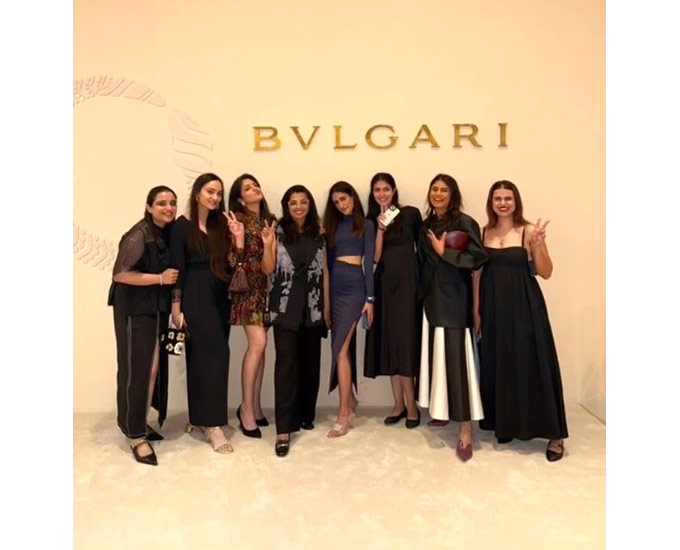
Team Longform at the opening of Bvlgari Serpenti Infinito exhibition at NMACC in Mumbai.
What about ego management? Between the client and the media person, how do you walk the tightrope?
Neeta: I feel ego management for clients today is less because earlier the industry placed people on a pedestal and big names did not have the opportunity to talk to their customers directly. Today, customers are engaged so brands don’t always need a publicist to keep them in check. The world will keep you in check if you live in an ivory tower.
Pareina: Sometimes ego management of media is more than it was in earlier times when it comes to younger journalists who would like access to a room. Some younger names start thinking of their voice before the brand’s voice and I often say to them, listen guys, it’s transient. But this I will say in support of editors, I have never ever found editors who have worked on the basis of ego. An exception is not the rule.
What has this profession taught you? Give me one point.
Neeta: A lot of patience. It is like an equilibrium.
Pareina: I have learnt that that subjective truth often overrides objectivity.
Shefalee Vasudev is a journalist, cultural commentator and editor-in-chief of The Voice of Fashion, a digital magazine on fashion, culture and design. Author of Powder Room: The Untold Story of Indian Fashion, Shefalee worked at India Today, The Indian Express, and Mint Lounge, in senior editorial roles. The first editor of Marie Claire India, she is now a trained narrative therapist.

 The Voice of Fashion