A conversation with urban anthropologist Rahul Srivastava about Dharavi, the mahua flower, terroir and the unexpected connections between the places we inhabit and the things we call luxury
Paris was in the grip of an extraordinary heatwave when I met Rahul Srivastava at Café Arts et Métiers this July. Like the haze of heat, our conversation took its own unexpected route. I had gone to meet Srivastava, an anthropologist and one of the people behind MAH—the artisanal spirit made from mahua flowers gathered in the forests of Chhattisgarh, which is distilled and bottled in Paris.
Besides the regenerative resilience of India’s forests and its tribal economies, we ended up talking about cities and buildings, Dharavi, terroir and the curious power of language. How language makes some things desirable and others diminished. Srivastava, who co-authored The Homegrown City: Reclaiming the Metropolis for Its Users with Matias Echanove, is also the co-founder of urbz, a collective of urban researchers and practitioners. A former Mumbai resident, he is an “expert”, I would say, on Dharavi’s overarching significance as a neighbourhood, and was most eloquent in arguing about slums and unplanned habitats. How they become inadvertent accomplices in the growth and design of cities. It was, in the end, a conversation about luxury, with the origin story of MAH, the spirit, sitting between us on the table alongside our coffees. However, what set out to be an interview around luxury eventually held a forest, a city and a bottle. Edited excerpts.
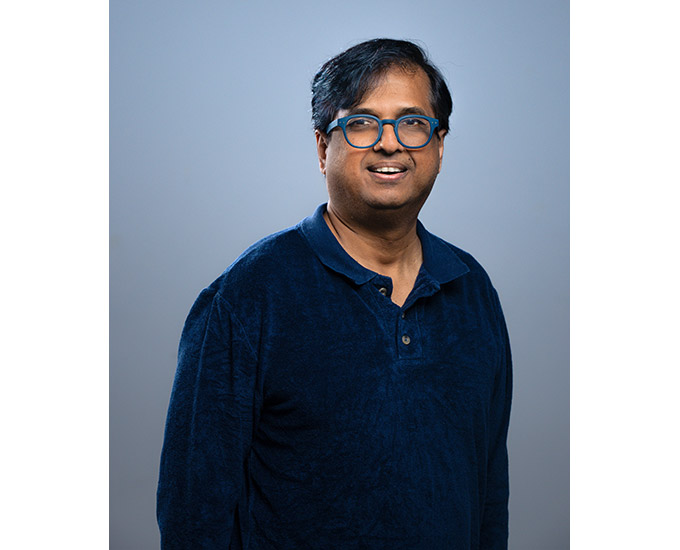
Rahul Srivastava, urban anthropologist and co-founder of urbz.
Whether we call a neighbourhood a “slum”, a drink “country liquor” or people “marginalised”, these are categories that shape not just perception but also value itself. Do you think language is a powerful way through which societies decide what deserves dignity and what could be left out?
Language is indeed the most powerful tool for expressing and expanding experience. It can accentuate prejudice, for sure. But it can also help us resist.
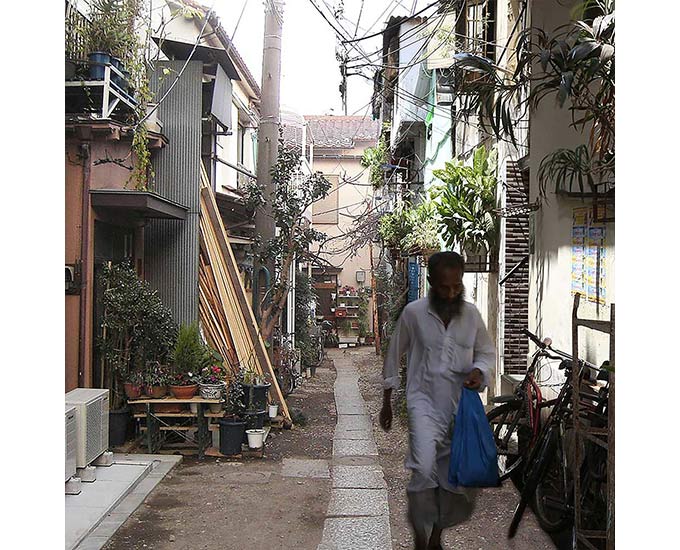
At the start of our journey at urbz in Mumbai in 2008, co-founder Matias Echanove produced a beautiful piece of visual fiction: a photoshopped image with a street in Tokyo on one side and another from Dharavi, Mumbai, next to it. The two images merged seamlessly. On one side, the same grammar of urbanism represented a slice of an accepted, modern habitat; on the other, a so-called ‘slum’. What old Tokyo shared with Dharavi was the presence of workspaces in homes, a form prevalent in many Asian cities. While Singapore celebrates this legacy in the form of shophouses, the same live-work logic that shapes hundreds of thousands of similar structures in India is seen as a problem.
Photoshopped image by Matias Echanove featuring collage of a Tokyo street (Ikebukuro on the left) and a Mumbai street (Dharavi on right).
We prefer calling Dharavi’s dominant structures as ‘tool-houses’ and have celebrated them through our Homegrown Street Project.
The resonance of the word ‘slum’ with India’s traditional spirits, shaped by a colonial gaze, is no coincidence. While the word ‘countryside’ in the English language evokes beautiful landscapes, in India, the word ‘country liquor’—an official category in the spirits industry—evokes a supposedly lower-quality, locally made (and therefore, paradoxically, not to be trusted) label for spirits. The national favourites remain whisky, gin and rum in all their avatars, while drinks such as mahua have to be reintroduced to urban, cosmopolitan and globalised Indian markets in a conscious move.
The connection between the label and the spatial world it represents is not to be overlooked either. The slum label for neighbourhoods such as Dharavi was underlined during the prohibition era, when the neighbourhood gained a reputation for producing ‘illegal’ palm toddy or traditional spirits made from jamun.
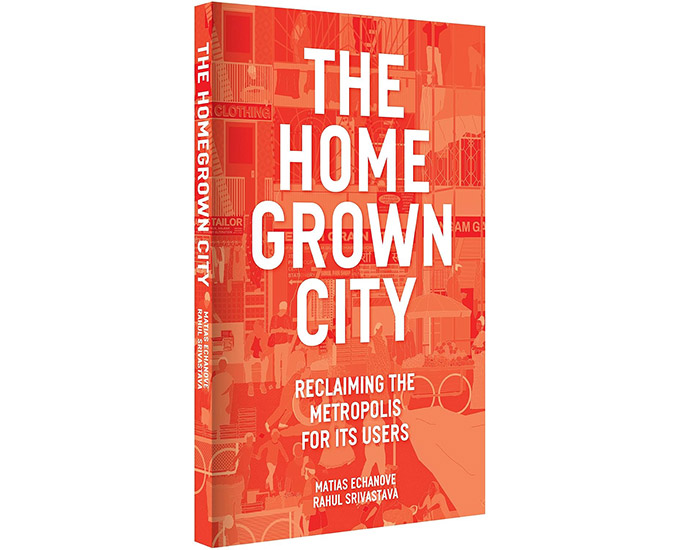
‘The Homegrown City: Reclaiming the Metropolis for Its Users’ by Rahul Srivastava and Matias Echanove.
Why do you think modern economies constantly raise the decibel about ownership and pride rather than recognising the people who actually create value?
As we argue in our book The Homegrown City, ownership and status coming together signals a one-dimensional understanding of what it means to own something. If a sense of ownership is only seen as the act of possessing through exclusion or status—the narrowest expression of private property—then you create a world where barriers of all kinds have to be put up. If ownership is connected to belonging and sharing, the way most of humanity lives, then even possessing does not exclude. In neighbourhoods of the highest density possible, people can, and do, create personal space for themselves with the right support, while sharing most of their everyday lived experience with each other. This is not a romantic evocation but an accurate description of lived reality. They use labour, skill, and everyday intelligence to transform collective ownership into practical tools for designing spaces that are adaptive, personalised, and multi-functional. One enhances the other.
Conversely, the spirit of sharing bursts through the most fetishised of privately owned spaces in India—the Mumbai apartment in a high-rise. Just see how many festivals get celebrated in tiny common spaces, squeezed between car parks and mini compound gardens, in exactly the kind of noisy, crowded ambiences that residents there often accuse the so-called ‘slum-dwellers’ next door of creating.
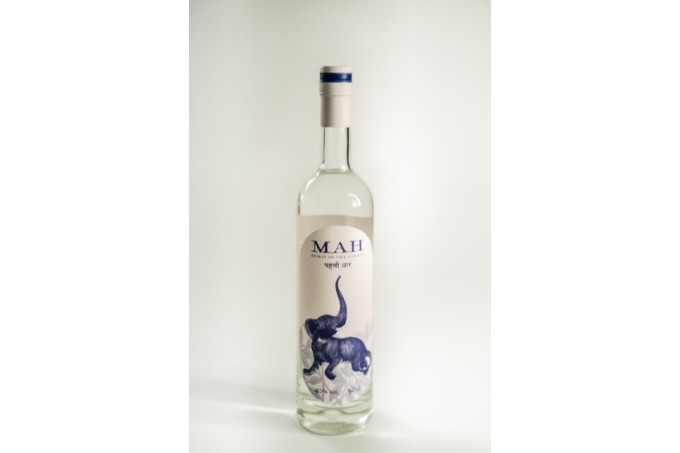
MAH—the artisanal spirit is made from mahua flowers gathered in the forests of Chhattisgarh, which is distilled and bottled in Paris.
You describe mahua not simply as a drink but as part of a forest ecology, an indigenous knowledge system and an economic possibility. When did you realise MAH could become a cultural product rather than merely a commercial one?
Just as mahua is not simply a drink, but something that emerges from an active forest ecology that combines indigenous knowledge systems – the idea of a cultural product is one that is tied to an economic possibility through reciprocity and exchange. As research on the Amazon forests in South America or even the Konkan landscape in West India shows, these landscapes were themselves the result of active human engagement. Each tree and layer of forest was actively produced, and provided for the hundreds of communities that kept them alive through use while being nourished and sustained by them.
As the anthropologist Marcel Mauss said, the gift and commodity are not watertight, discrete categories. They embody a complex balance, which produced active forest systems around the world that provided food, materials, and sustenance to millions of people.
In this light, the question of the ‘commercial’ needs nuance too. We stopped seeing forests as integrated knowledge systems when economics became exclusively about scale and speculation. Philosopher Donna Haraway points to the “Plantation Economy” as the turning point, from where things went downhill.
Our current climate crisis and environmental stress indicate that we need a fresh, scientific look at how we produce food and drink through the lens of forest systems. Most importantly, we need to cherish and value the communities who nourished them and make sure they are at the centre of every project that emerges in their name.
In India, mahua is one such product among several others. It is connected to forest food systems, indigenous knowledge, and the communities that still depend on it.
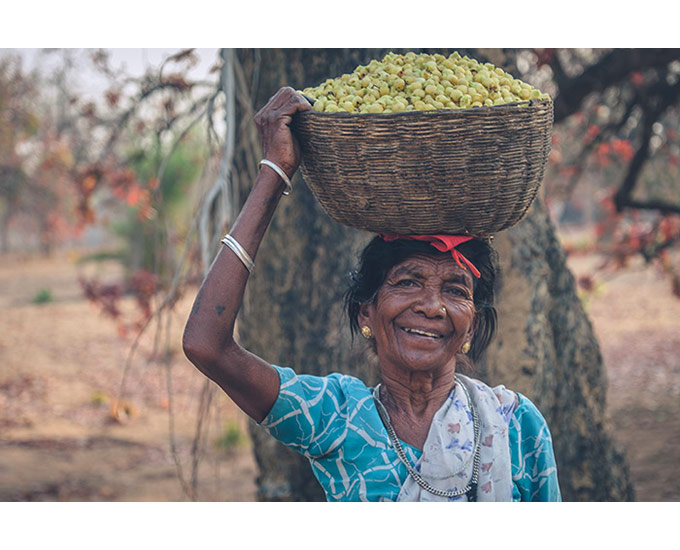
Mahua flowers being gathered by women in the forests of Chhattisgarh.
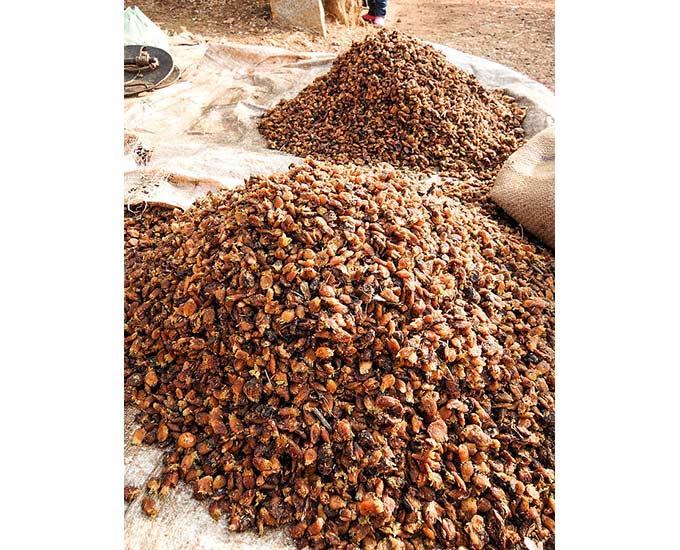
Dried mahua flowers.
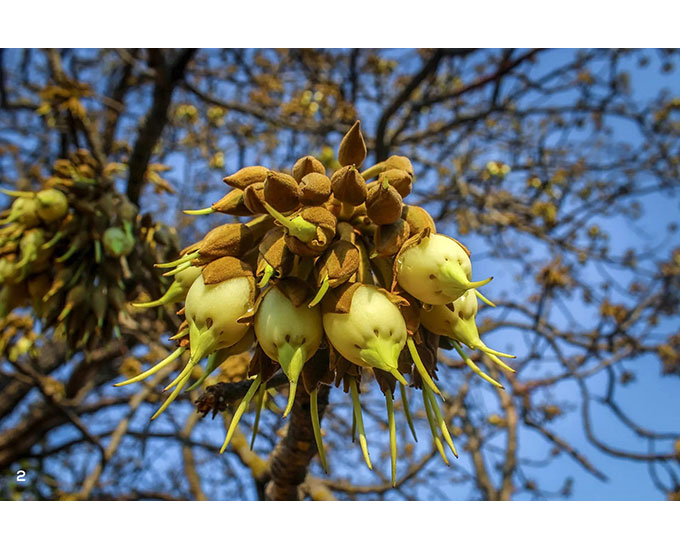
The mahua flowers.
You said that forests are “luxury” because they are regenerative. What would luxury look like if it were measured not by scarcity alone, but by the ecological knowledge that sustains it?
The history of luxury as a category that emerged in countries such as France, Italy and others was intimately tied to skill, terroir, heritage and tradition. Terroir is especially relevant to our work in urbz and MAH. It connects to locality and the materiality of space and resources. The narrative of terroir insists that the material foundations of all products must be regenerative.
Forests were traditionally active systems of sustenance. They were not just vestiges of a wild past, but a living system that had to be produced and maintained mostly by indigenous communities. Today, paying a high price for their inherent value is the surest way to support both—the forests and the communities that continue to sustain them.
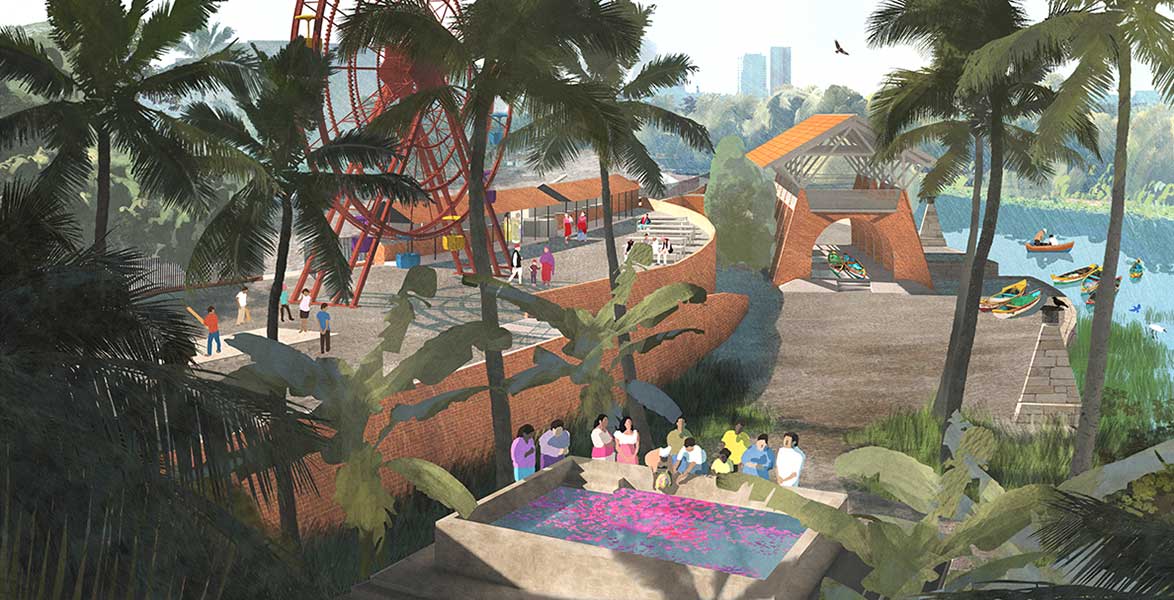
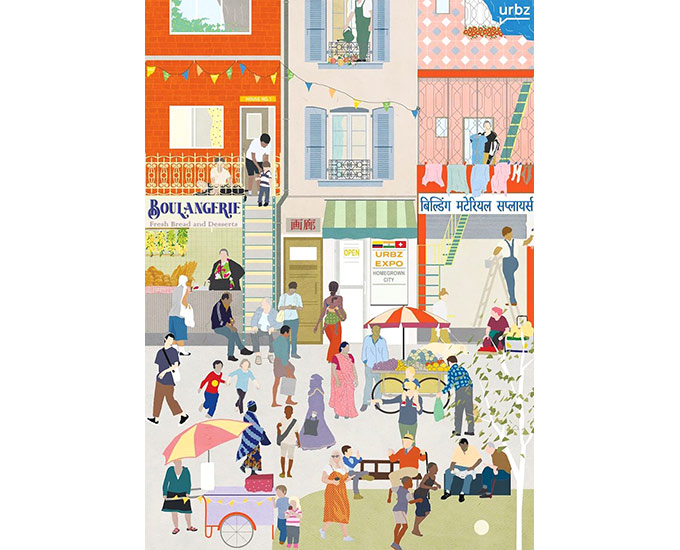
Illustration from the book ‘The Homegrown City: Reclaiming the Metropolis for Its Users’.
You work between anthropology, urbanism, design and now an artisanal spirit. Looking back, what conviction has remained constant through all these seemingly different journeys?
The conviction that humans are essentially a creative force and there is a need to recognise and use this, if we want to make a difference today, in a world that is essentially broken in terms of environment and economics. This is what I learned through my journey at urbz and my ongoing work with mahua.
This is counter-intuitive to what many think, that the world has come to a brink because of demographic growth and over-consumption. However—and this is where I owe a lot to my certified education in Anthropology—we can pull ourselves out of it if we start acknowledging that we are a creative force. And this creativity has been curtailed, controlled and cauterised in the name of a singular trajectory that we claim for ourselves.
Shefalee Vasudev is a journalist, cultural commentator and editor-in-chief of The Voice of Fashion, a digital magazine on fashion, culture and design. Author of Powder Room: The Untold Story of Indian Fashion, Shefalee worked at India Today, The Indian Express, and Mint Lounge, in senior editorial roles. The first editor of Marie Claire India, she is now a trained narrative therapist.

 The Voice of Fashion