The Voice of Fashion
In fashion’s algorithmic age, originality is no longer just a creative act. It is a strategic discipline. Civilisations provide the roots. Designers are remembered for the branches they grow
Visual intelligence. Strategic originality.
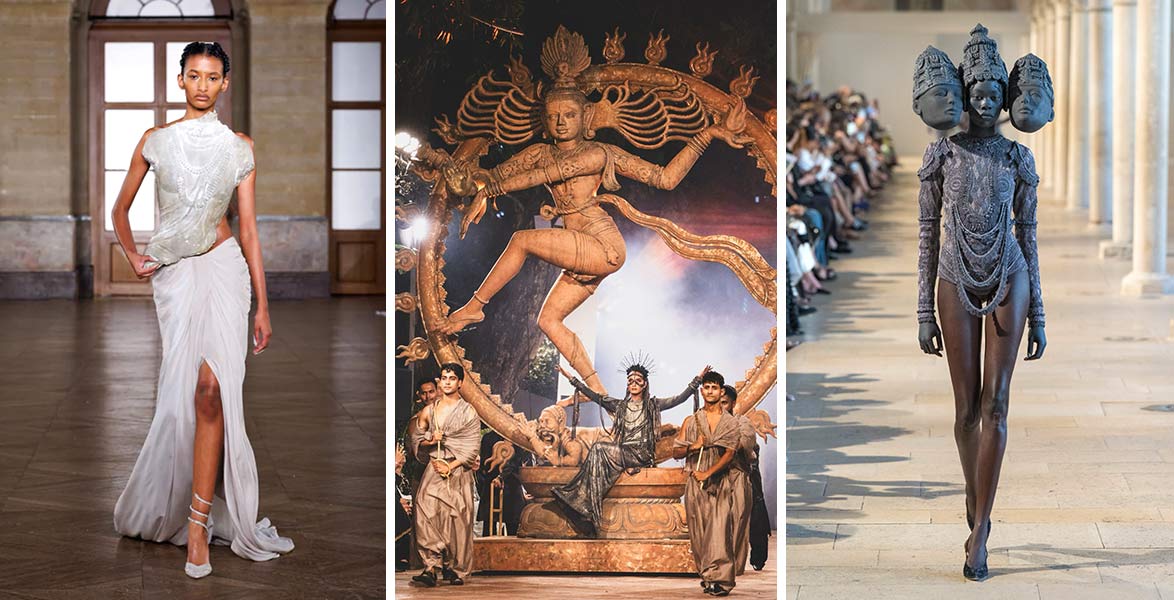
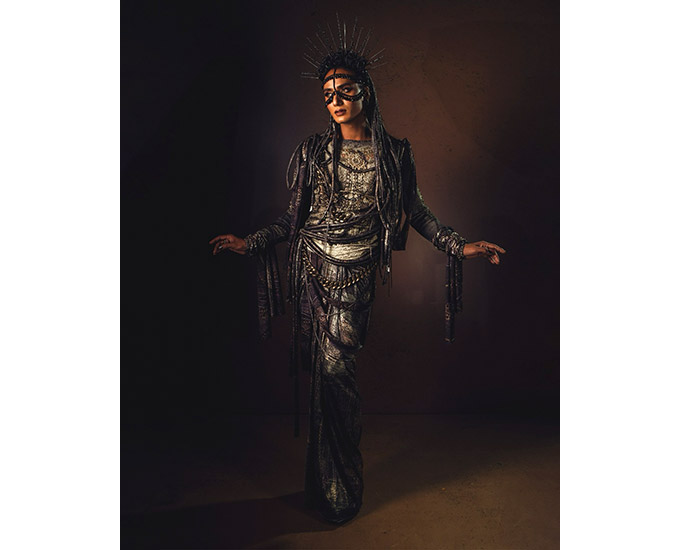
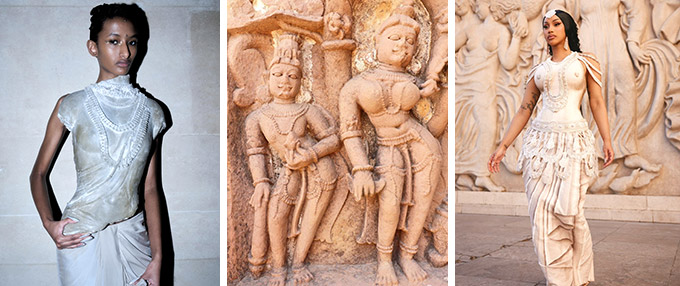
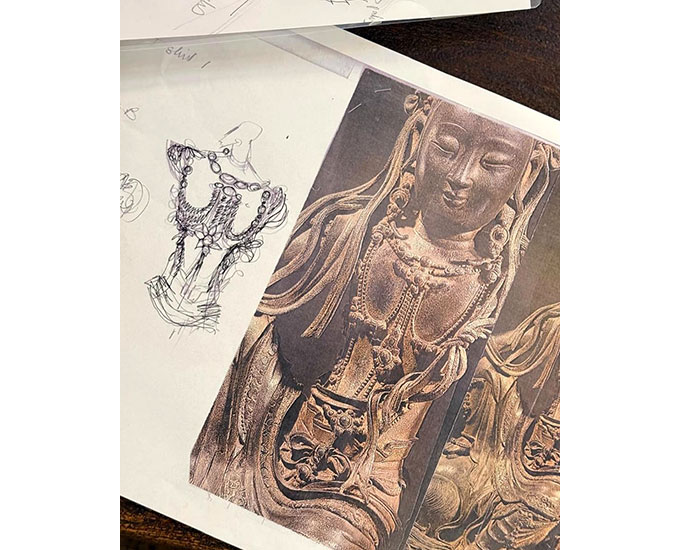
These may well be the two most important creative skills fashion design ateliers need to invest in today. Rahul Mishra’s Devi, shown two days ago at Paris Couture Week, Gaurav Gupta’s Divinity Breastplate, unveiled last season in Paris, and Tarun Tahiliani’s India Modern couture—drawing on “the sensuality of Indian sculpture, Nataraja, apsaras and temple torsos” in different ways over more than two decades—invite us to throw a stone. Literally.
At whom? At what? A designer? An idea? Or the persistent belief that originality is born in isolation?
This latest Devi debate may concern just three couturiers. Heaven is a noisy place, though not necessarily enlightening. Because it opens the doors to a larger courtroom, jammed with unresolved arguments about inspiration, originality and ownership. The noise stretches far beyond apsaras.
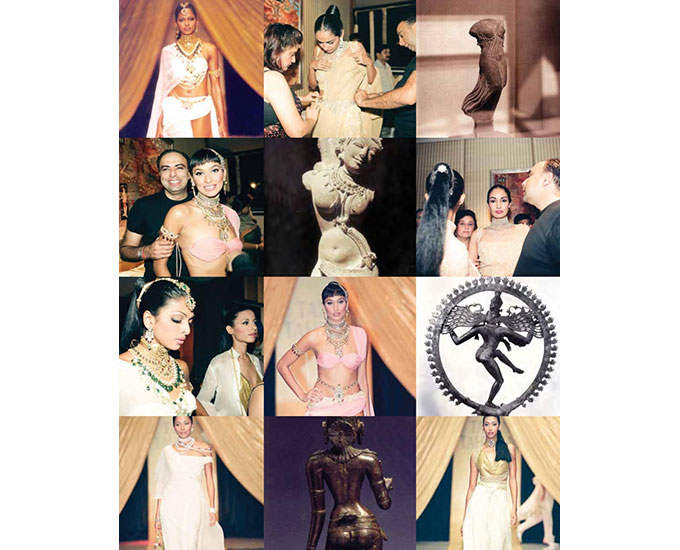
In an age when every runway is photographed, indexed and algorithmically recirculated within minutes, originality itself is under unprecedented scrutiny. In Indian fashion, perhaps, more than most. It continues to evolve through silhouette, construction, finishing, styling, photography and communication. But its inspirational hunting grounds in patterns and motifs remain surprisingly familiar.
Palaces and princesses still rule many new runways. Roses and jasmine continue to bloom on ghaghras, saris, short dresses, cushion covers and curtains. Forests never run out of their fauna. Opulence is everywhere, on every lehenga. Stone sculptures are permanent residents of lookbooks and mood boards. Tigers, tribal motifs and, yes, even the Taj Mahal reappear in collections. And why not?
Designers like Ritu Kumar, Sabyasachi Mukherjee, Tarun Tahiliani, Abu Jani and Sandeep Khosla, Manish Malhotra, Manish Arora—when he did still work in Indian fashion— Rahul Mishra, Sanjay Garg, Gaurav Gupta and several others have returned repeatedly to India’s civilisational archive to create for the present. They have gone on to interpret mangoes and Maharajas, Mughal gardens and Nathdwara’s Pichhwais, Lucknowi embroidery traditions, Kashmiri flowers and Kalamkari drawings. Each has attempted to preserve a recognisable signature while drawing from a shared inheritance.
Overlaps and the Absent Ombudsman
Overlaps have always existed, though they have largely remained exceptions before fading into the night. The Indian fashion ecosystem encourages this circulation. Embroiderers and karigars move between ateliers. Design teams change employers. Supply chains produce textiles for multiple labels. Just as inspiration travels from temples to Tanjore paintings, so do ideas. Occasionally, audaciously, what is yours becomes mine.
The result has given us two parallel realities. One, Indian couture has evolved into a global language. It has acquired sophistication for international markets.
Two, it has also produced an exhausting sameness, especially in bridal fashion back home. It is often difficult to identify whose lehenga-choli-two-dupatta set one is looking at. Priyanka Chopra Jonas’ red wedding ghaghra choli ensemble by Sabyasachi became one of the most copied bridal looks in recent Indian fashion couture. Listing every variation would serve little purpose.
The industry has not always ignored this. While well-mediated conversations remain few, social media swirls suggest a messy industry ethic. There is no real perspective from a governing body or conflict resolution from any council. There is no industry ombudsman either.
Mishra successfully pursued legal action last year against manufacturers copying his tiger motif and floral embroideries. Tahiliani has rarely remained silent when his work has been imitated. Ritu Kumar, Rajesh Pratap Singh, Sabyasachi, Manish Malhotra and others have invested in copyright registrations and design protection.
Even so, can you and I stand up and win a debate as to where Tahiliani’s Lucknowi embroidery vocabulary ends and Abu Jani and Sandeep Khosla’s begins? Or where Malhotra’s Mijwan collaborations become entirely distinct from another couturier’s interpretation?
Perhaps we can.
Creativity x Strategy: The New Design HandBook
But only if ateliers themselves think about creativity and strategy in one breath.
Gupta’s Divinity Breastplate, Tahiliani’s interpretations of Nataraja and Mishra’s Devi are less about repetitive inspiration, than about why a modern atelier can no longer rely solely on exceptional embroiderers, pattern-makers, textile developers and designers. Not even on the sole vision of its master designer. It also needs a new kind of practitioner: researchers and knowledge workers who continuously map fashion’s visual landscape. People who know who showed what, where, when and why. Who study museum acquisitions, archives, exhibition catalogues, art fairs, runway collections, competitors and social media—not to suppress creativity, but to sharpen it.
Creativity today requires visual intelligence as an additional layer of discipline. The ability to know not only where an idea comes from, but where it has recently travelled. Strategic originality is not about avoiding shared inspiration. It is about understanding the visual conversation already taking place—and contributing something unmistakably your own.
Shared inspirations or a medley of apsaras and devis is quite fine. But it might be the added responsibility of the designer to venture far enough beyond the terrain that has already been mapped to make the journey unmistakably their own. Interpretation and inspiration live between the “root” idea and the branches. Civilisations provide the roots. Designers are remembered for the branches they grow.
Strategic Originality
If you look at it that way, the Devi debate is more interesting than the social media spectacle. Can anyone claim ownership over an apsara? A Yakshi? A Devi? Or the sculptural imagination of a civilisation that has inspired artists, architects, jewellers and designers for centuries?
Probably not.
Because the idea that any work of art emerges untouched by what came before it is itself a modern myth. Every creative discipline has wrestled with this uncomfortable truth. Fashion perhaps more visibly than most.
Christian Dior did not invent the flower. Yves Saint Laurent did not invent Mondrian. Schiaparelli did not invent surrealism. Mishra did not discover the Devi, nor Gupta the Yakshi, or Tahiliani the apsara. Or Sabyasachi the tiger, for that matter. Their achievement lies in transforming shared references into signatures. Gupta is clearly way ahead in this game.
In the delightful, easy to read, small book, Steal Like an Artist, American author Austin Kleon dismantles the romantic notion of originality as a lightning strike of genius. Creativity, he argues, is cumulative. Artists collect, borrow, absorb, reinterpret and transform. “Nothing comes from nowhere; every new work carries traces of what preceded it. Nothing is completely original. You are in fact, a mash-up of what you choose to let into your life,” he writes.
Kleon’s point, however, should not be misunderstood. He does not make a case for imitation. He argues for transformation.
That distinction matters. Indian fashion does not need fewer devis or apsaras (or perhaps it does?). But it certainly needs original ways of presenting them with the factual disclaimers.
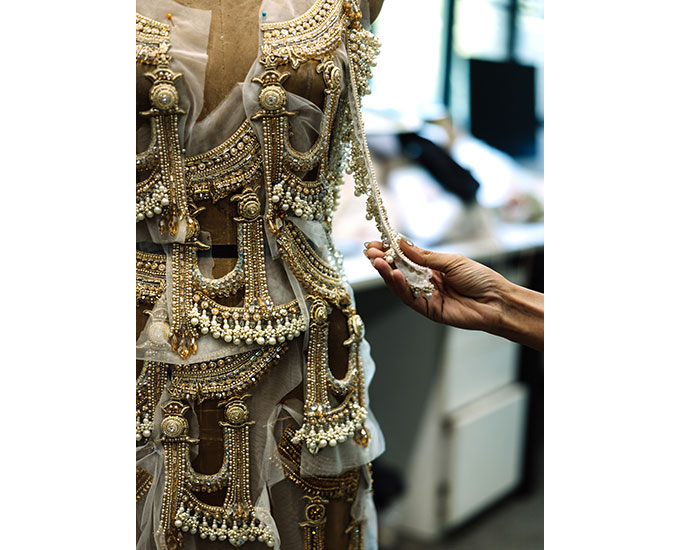
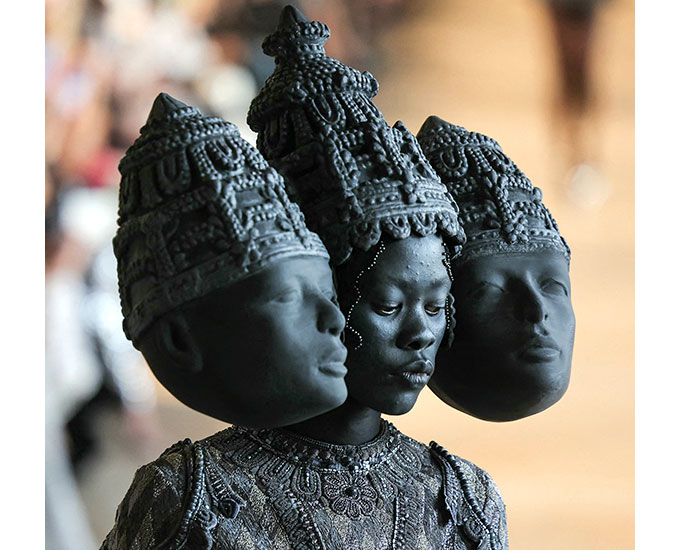
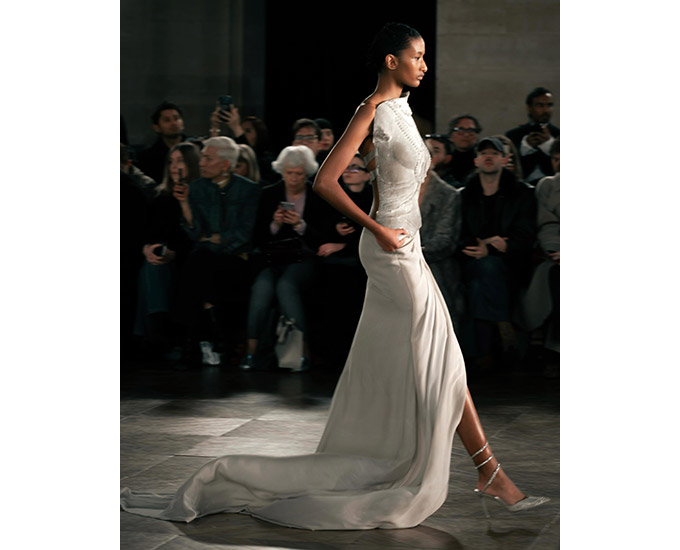
Banner: (L-R) Gaurav Gupta SS 2026 Haute Couture collection, Tarun Tahiliani Annual Parade Edition Two and Rahul Mishra Haute Couture Fall 2026 collection.