The Voice of Fashion
A couture showcase that worships two deities—the designer’s imagination and the Indian artisan’s hand. And why it should lead to art fair collaborations, limited edition design pieces and segue into another collection
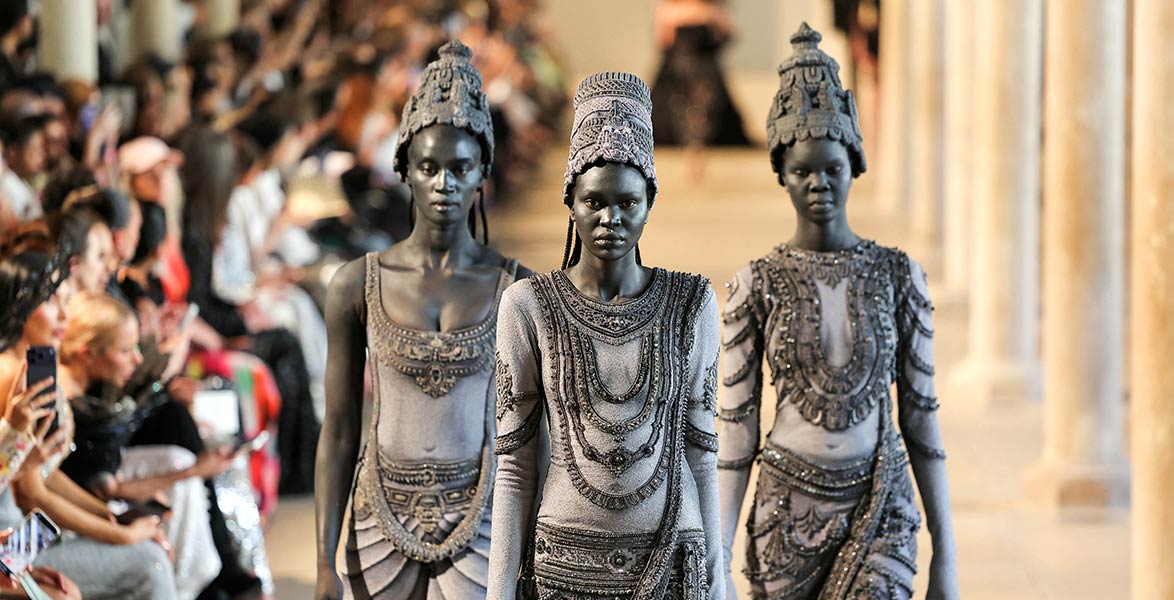
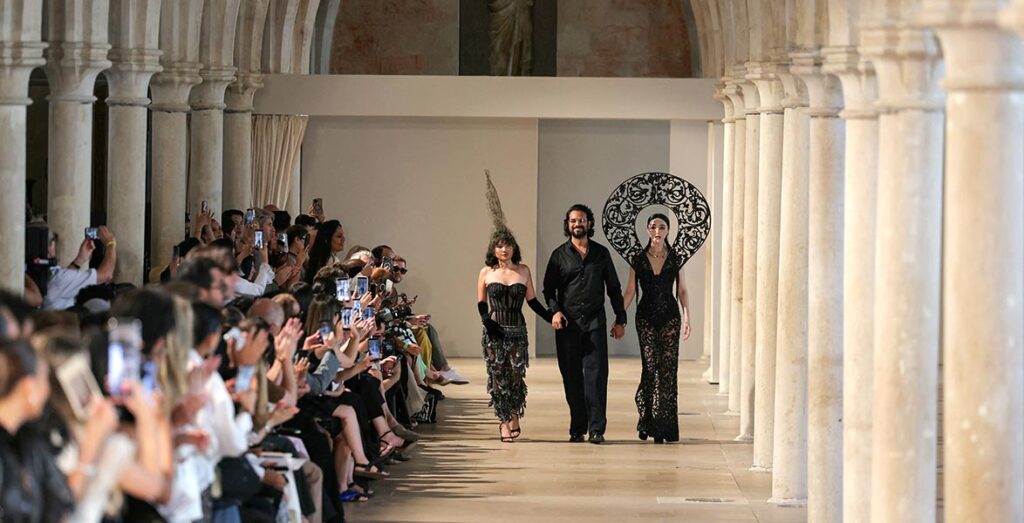
Most couture collections nudge admiration with their overwhelming craft. You watch, well mostly, in awe. Then there are those that urge you to pause from getting carried away with awe and contemplate. Rahul Mishra’s Fall 2026 couture collection Devi, presented yesterday at the Collège des Bernardins as part of the ongoing Paris Haute Couture Week, was the latter kind. Set within the soaring stone vaults of the 13th-century Gothic monument, the show was an ode to Indian civilisation, sculpting rock cuts and ancient stone carvings as couture.
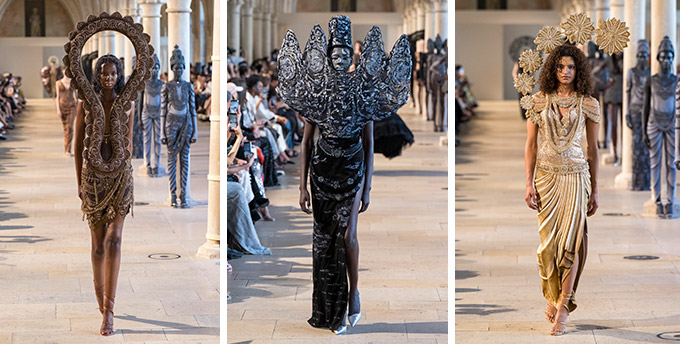
The collection found its inspiration in India’s temple sculptures, from the Hoysaleswara Temple in Karnataka to the Ajanta Caves in Maharashtra—interpreting apsaras, devis and celestial figures whose jewellery, posture and ornamentation have survived centuries in stone. Yet, the true protagonist of Devi, and that’s the underline of this show, was not mythology alone.
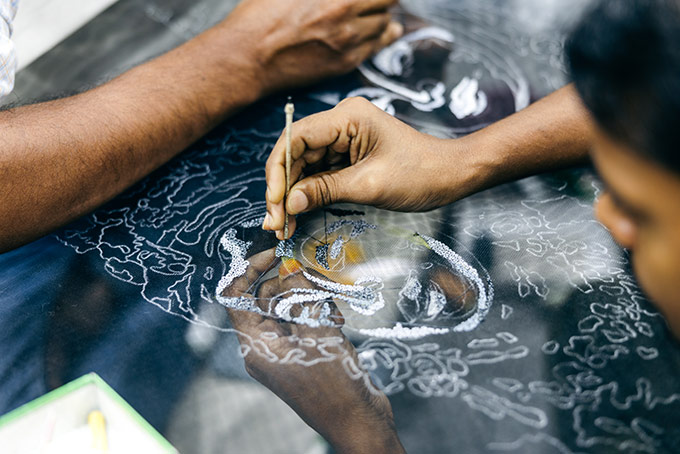
For many years, Mishra has demonstrated that embroidery can interpret modern fine art, poetry and spirituality. With Devi, he suggests that it could interpret sculpture. Layer upon painstaking layer of zardozi, beads, crystals, metallic threadwork and hand embroidery transformed fabric into surfaces that appeared chiselled rather than stitched. Draped necklaces were used as garments. Ornamentation was used as decoration as well as architecture.
Fit For A Goddess
Mishra’s press note starts with this line: “I saw the angel in the marble and carved until I set it free”. He ruminates for a moment if Michelangelo actually used these words. But there is no risk of dispute as the Florentine artist’s work set free not only angels and demons but also his viewers, who feel something unclasp inside the visceral layers of human baggage.
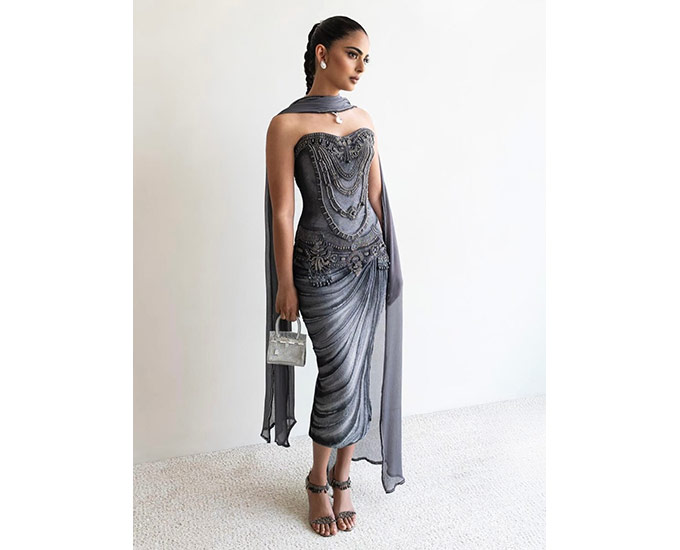
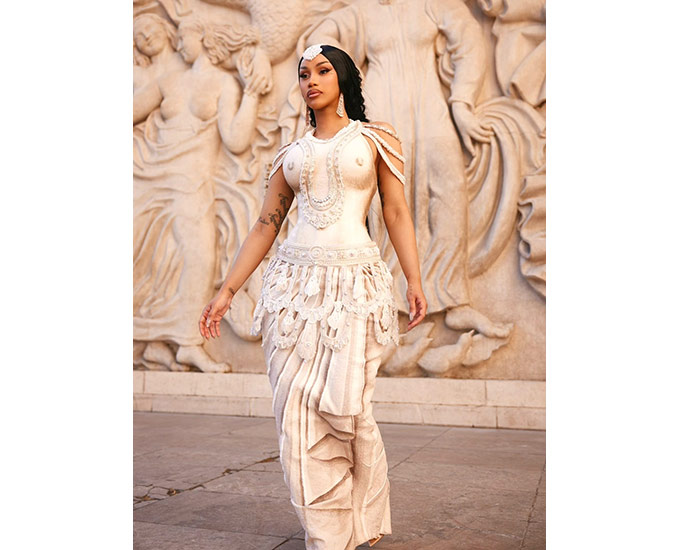
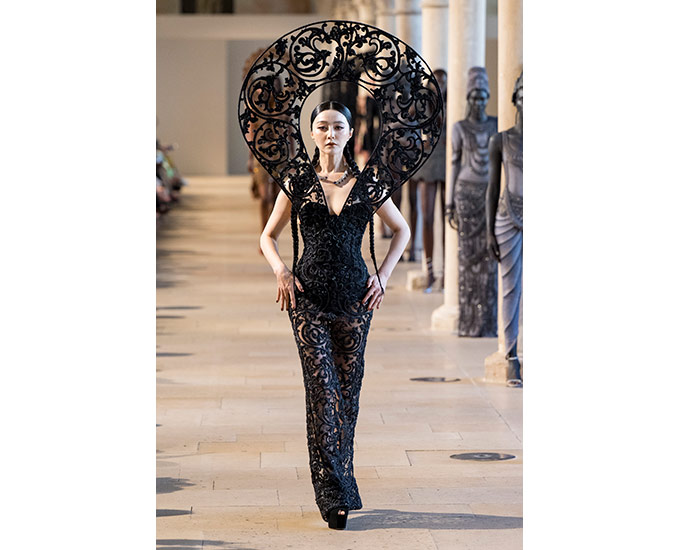
In a nod, perhaps, to the global consciousness of art in stone, the designer takes off from Michelangelo to extend his thought to India’s temple complexes, cave sanctuaries and monumental carvings. Spaces where Indian artisans—bless their hands—have turned sandstone, granite, basalt and chloritic schist stone into eternal muses. Mishra’s Devi shows both the goddess form, which is high and mighty because of lace, embroidery, sequins and threads, as well as celestial attendants.
This is where Devi exceeded the runway: the show was set to music composed by Jayant Luthra, featuring the mridangam, ghatam, temple drums, kanjeera, manjeera, singing bowls and thavil recorded in the Ajanta Caves. The collection included embroidered and tailored interpretations of necklaces, girdles, anklets, and armlets—merging cloth and embroidery, architectural forms with grey and black, and other hues of stones. The jewellery was co-designed with Tanishq Natural Diamonds.
The collection hinted at an ecosystem of creativity that could strategically extend well beyond one couture week—a compelling prospect for associations with institutions such as the India Art Fair. Its embroidered surfaces and sculptural vocabulary could easily evolve into collectible art objects, museum collaborations, installations, jewellery or limited-edition design pieces.
Overstating The Divine
It was in the grey palette that Mishra’s vision felt most evocative. Yet, Devi was not without moments that invite debate. At times, its references to temple sculpture and divine femininity became literal and the symbolism left little for the audience to interpret. In some garments, suggestion might have proved more powerful than recreation.
A day before the show, couturier Gaurav Gupta’s sent out images of the Divinity Breastplate, shown as part of his Spring/Summer 2026 Couture presentation in Paris this January—also, as it happens, inspired by temple sculptures. That post gave wind to speculation. While one might argue that shared source material can certainly lead designers to similar doors, the fact that Gupta reposted a reel on the making of his piece just a day before Mishra’s show made it hard to ignore.
A big miss at the show was not bringing any Indian model—voluptuous, plus-size, or beyond the fashion normal—to symbolise the sculptural Devi. Or any model that spoke for the female form in ancient stone art.
It was the final sequence of pale nude and bridal couture that should have been eliminated. Beautifully crafted as Mishra’s creations are, it softened the momentum established by the stronger sculptural looks that preceded it. In the dramatic dialogue between stone, body and ornament, the familiar bridal vocabulary from India clearly did not belong.
Chinese super star Fan Bingbing, the star model of this show, was greeted with loud cheers outside by the paps and inside by smiling fans, including this writer. She combined theatrical poise and realism, and her carved-in-stone expression was worth applauding. Her inclusion was commercially significant—marketwise, as someone would say.
Cardi B’s arrival generated the inevitable frenzy that accompanies contemporary celebrity culture. But neither Bingbing nor Cardi diluted what Devi reminds us: that the future of couture may still lie in the human hand, even as scale, technology, AI and commerce scare and fascinate us. The heart is where the hand is. Art too.
Banner: Rahul Mishra Couture Fall 2026 collection, ‘Devi’ presented at Paris Haute Couture Week.