The Voice of Fashion
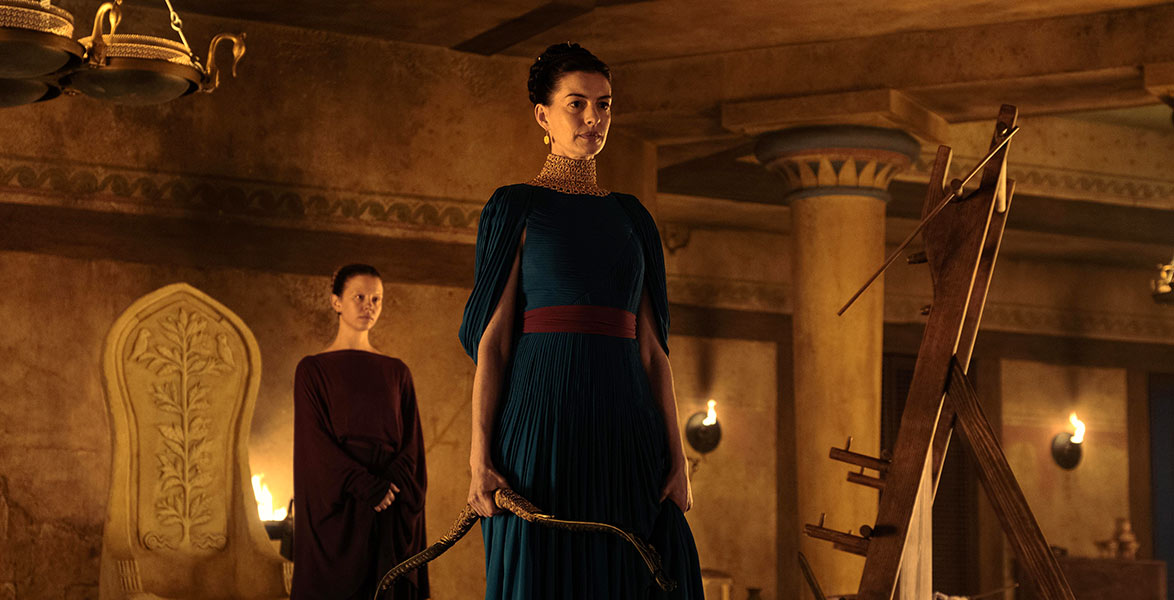
Penelope’s Loom—Bronze, Wood and Waiting
Beyond journeys, heroes and battles lies another epic: woven through bronze, wood, cloth and the endurance of material culture.
How we remember Christopher Nolan’s The Odyssey will depend, in part, on the stories we were told long before we entered a cinema. Or how Homer first reached us through childhood retellings by mothers and teachers, through Amar Chitra Katha perhaps. Or, through echoes of the Mahabharata that taught us another language of impossible journeys and flawed destinies. Odysseus, like Arjuna, Karna or Ravana, belongs to that rare cast of epic characters who live in our imagination long after we have forgotten their battles.
Yet, epics also endure through their materials.
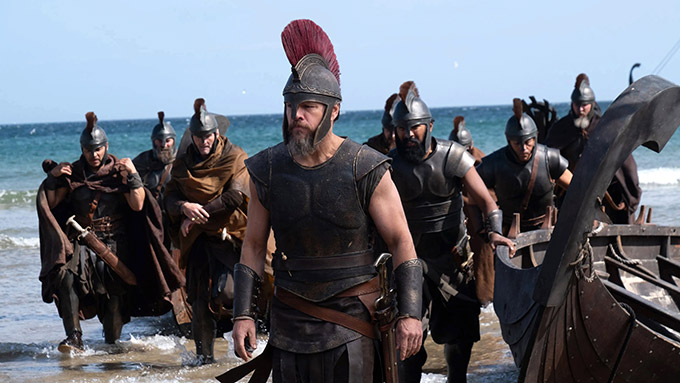
That may well be among Nolan’s most remarkable achievements. Beyond the scale of the production, the IMAX filming, the six countries that stood in for the ancient Mediterranean, and the thousands of cast and crew who have rebuilt Homer’s nearly 2,800-year-old poem for the screen, lies another story. That will delight anyone interested in material culture: the recovery of a tactile Bronze Age world remembered by Homer and reimagined by Nolan.
A world where bronze was the defining material of an age; where wood was not just timber, but the framework of civilisation; where cloth became Penelope’s political instrument of delay.
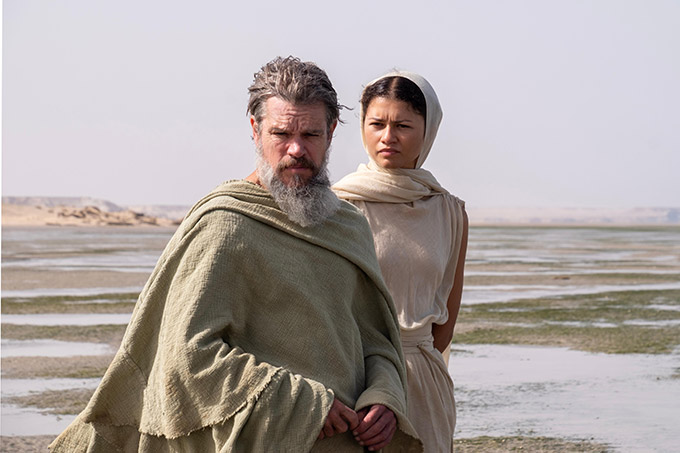
While Ithaca waited for Odysseus, Penelope promised her relentless suitors that she would choose one only after she had finished weaving a burial shroud for her father-in-law Laertes. By day she wove. By night she unravelled every thread one strand at a time. Her loom was not simply a domestic object. It was resistance by a Queen pushing back a dreaded future.
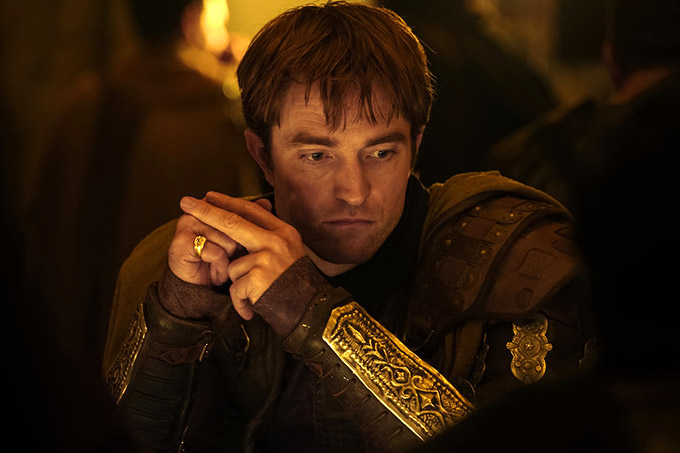
The film’s costume designer Ellen Mirojnick has spoken about her insistence on tactility—giving every piece of linen, leather, armour and sandal the texture and dimensions of lived history. Her Mycenaean costumes for kings and soldiers, the drapes of Athena and Calypso, and cinematographer Hoyte van Hoytema’s Mediterranean light together evoke an imagination that has felt tantalising even before watching the film. Even the monumental Trojan Horse, reportedly 40-feet tall, weighing 8,800 pounds, transported in 27 crates to the sea shore, argues for craftsmanship. Then and now.
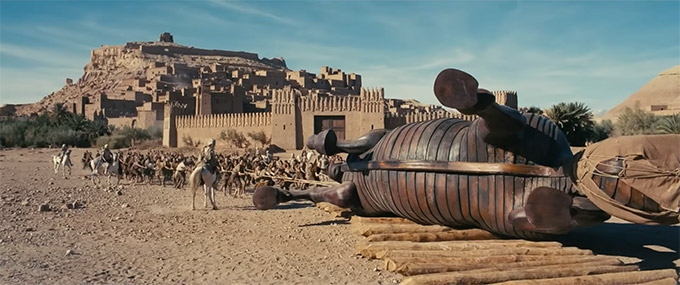
Like many of you, I have spent the past fortnight reading interviews, production notes and features on The Odyssey. Long before its release today, the film has radiated the excitement of ambition and scale. Yet, what has bewitched me most is that in our era of chrome finishes, AI-generated images and pretty-perfect digital surfaces, why do we suddenly long for grain, weight, patina, fibres, bronze items and imperfections? Why does worn linen feel reassuring compared to flawless fabric? Why does wood still move us?
Perhaps because materials remember what human minds forget. Long before they become costumes in cinema, they bear the marks of the hands that made them. Before they tell stories on screen, they have already lived through personal and political history. Design acquires meaning when it is handled, worn and repaired. To find them is a homecoming.
Banner: Anne Hathaway as Penelope in Christopher Nolan’s The Odyssey.