The Voice of Fashion
As Indian fashion shows signs of creative fatigue in the fall of October 2026, it may need to look beyond celebrity front rows, influencer metrics and international headlines. The real test of influence lies in cultural relevance, creative clarity and the ability to connect with consumers.
The possible fall in the authority of influence and the chill of creativity in the shows so far, at the ongoing edition of Lakmē Fashion Week x FDCI in Delhi, might be the first steps towards a new spring for the industry. Seen without confrontation, it could sound the bugle again on what the Indian fashion industry really values. Or not. Market research, consumer insight and sponsor feedback beyond the game of follower counts and influencer metrics without enough analysis may be one direction.
Having attended and reported on fashion weeks for a straight 21 years (since 2005 and online through and after COVID), seeing the industry’s many ups and downs, one understands that the slight dimness we see in scenography concepts, creative design risks or clothes themselves as raging provocateurs of our times, is not just about the fashion week bodies or their advisors getting it wrong. This is not an easy era in India or abroad for any industry dependent so much on pretty narratives.
The Crisis of Influence is Not So Simple
Fashion flourishes despite difficult times. A report in Vogue Business last week, examines social-media performance during the Spring/Summer 2027 fashion month. It reports $1.24 billion in earned media value, up 64 per cent from the previous season. Fashion’s capacity to generate social-media attention remains substantial; whether that attention translates into meaningful influence is a different question. At the same time, the report identifies a shift in how brands are thinking about it.
The disruptive political and social environment in India today surely seeds the need to revisit the theory of “influence”. Since several designers opt out of fashion week presentations now and then (some have departed the arena for good) for private, standalone shows, personalised media management and sponsored off-site shows, they break away from a cohesive, united platform. The industry thus grows (or plateaus) due to several different factors. For designers, brands and cohorts, hyping international success of a handful of designers as proof of good domestic business remains a marketing strategy.
The arguments for and against such transitions have been made before given that the business of fashion has needed aggressive, multiple approaches of seeking attention and sale.
What Studies Say
That said, a mismatch between hype, visibility, influencer-domination and real influence is becoming more evident across fashion. Not just at the bi-annual fashion weeks. The assumption that follower counts or a stream of stylish photographs will automatically shape taste, create demand or public discourse needs to be examined including by independent brands. A market study might redirect such investments and help rethink the idea of influence and where to invest. The 2025–26 report Decoding Influence by Kofluence, an influencer marketing agency estimates India’s influencer-marketing spend at ₹3,500 crore in 2026, nearly double its level two years earlier. It reports that 62.1 per cent of surveyed brands believe longer-term creator partnerships deliver better returns than one-off campaigns. Only 13.3 per cent of brands surveyed directly link influencer marketing to formal revenue targets.
The Designer As the Captain of The Ship
The other bit is that India’s leading fashion designers, whether it was Manish Arora or Rohit Bal, to name just two who are not in the business, remained leaders and dictators of staging concepts, clothes and audiences. Many among those who currently show on organised platforms appear to have fragmented their individual voice with choreographers, stylists, set directors and model managers. The fashion show that gives gooseflesh, as we all know, has one uncompromising captain of the ship flying the mast high. Who understands the visual and kinetic effect of performance, glamour, styling, music and set design.
Perhaps it is time the industry bigwigs debate what kind of influence they want to have. What kind of intelligence they value? We constantly hear about appeasing either to a film star, a sponsor, a too-successful designer or a high-handed media person. Maybe the script could change?
I would make three points for what it is worth. Draw clear differences and values between celebrity casting, FROW influencers and cultural alignment. The other is about preferring sustained relationships with one-off partnerships so that there is greater emphasis on continuity, coherent brand messaging and relationships with people who genuinely fit the world of a designer brand. Finally, a clear move from exclusivity to community, may burst the bubble.
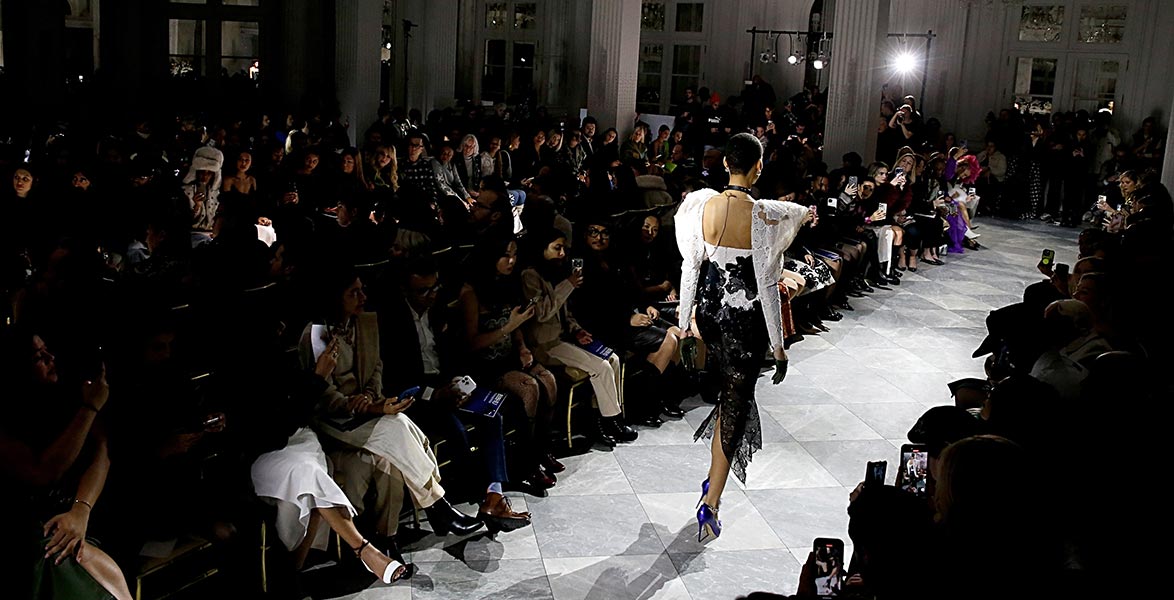
The article as amended at 20:30 hours on the day of its first publishing as a factual error was brought to our notice by LFW x FDCI. Banner:A model walks the runway at the Bibhu Mohapatra show during February 2024 New York Fashion Week
Credits: DOMINIK BINDL / AFP