The Voice of Fashion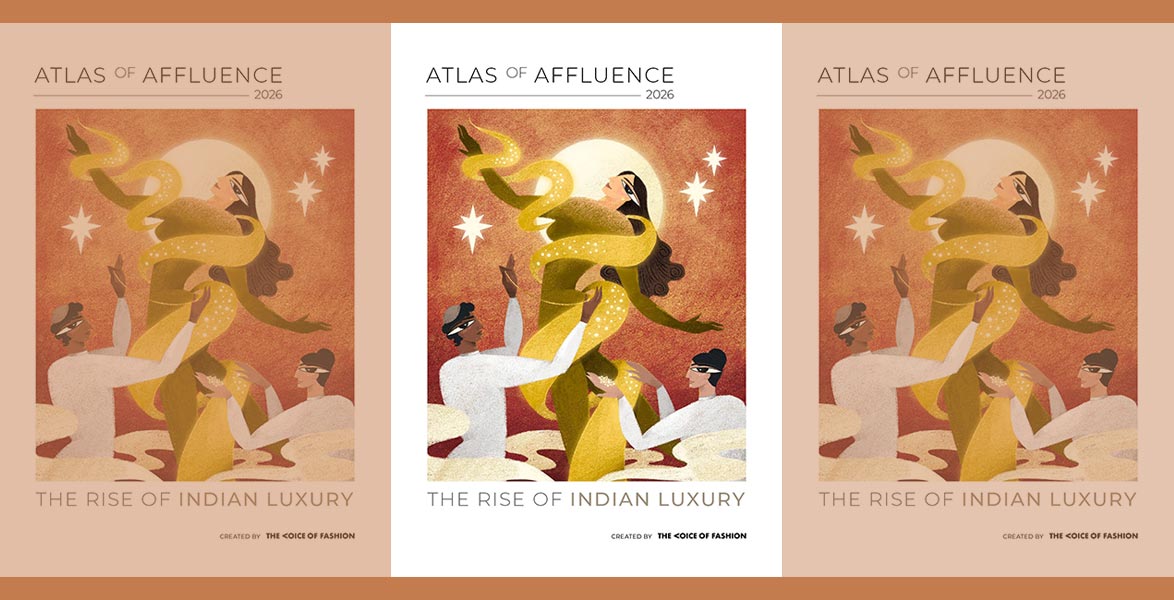
The first edition of Atlas of Affluence in 2022 examined a market in recovery. It asked how Indian luxury was recalibrating after the disruptions of the pandemic. This edition, focused on The Rise of Indian Luxury, asks a different question: what is Indian luxury becoming? Our enquiry kept in mind what global surveys say about India as a market and its affluent consumer mindset, while creating a valuable chapter that focussed on luxury created in India and consumed and aspired for, everywhere in the world as well as at home. Over six months, we commissioned a dual research study across six cities— Mumbai, Delhi, Bangalore, Hyderabad, Ahmedabad and Jaipur. Conducted by Kantar, the study combines quantitative surveys with qualitative conversations to understand how affluent consumers interpret Indian luxury — and where they perceive its challenges and gaps. The methodology and sample framework are outlined in detail.
The findings reveal a decisive shift. Indian luxury is strongest when anchored in heritage, artisanal skill, ingredients, lineage, ritual and philosophy. Respondents demonstrated a clear willingness to pay for quality and authenticity — but they were equally vocal about the need for global benchmarks, validation systems and institutional consistency. This research also finds that Indian luxury does not operate in isolation. Dubai has emerged as a significant extension market for Indian fashion and jewellery — a site of diaspora consumption and retail experimentation. It was therefore introduced into the questionnaire, recognising its growing influence, especially how Indian fashion and couture brands present themselves there.
How the Ecosystem Speaks
This edition reflects that Indian luxury is interlinked as a system. Fashion and couture, jewellery, crafts and textiles, hospitality, food and beverage, beauty, wellness and healing, art, design and architecture—are connected arenas shaping perception and value. While the first edition of Atlas of Affluence examined only a few categories, this one expands the range, connecting multiple lifestyle sectors into a single, wide, analytical frame.
Contributors to this edition reflect that breadth: strategic insights from industry leaders, analysis from practitioners, reportage from the field. Interspersed across the book are 100 voices from across the luxury ecosystem — designers, jewellers, chefs, architects, gallerists, strategists— whose reflections collectively map how the industry articulates luxury at this moment. This body of perspectives forms a new IP within the Atlas of Affluence. One of the more striking undercurrents in this research is the elevation of taste and restraint among affluent Indian consumers. It suggests a movement away from overt display and mid-range accumulation towards considered but edited acquisitions. Several respondents articulated a preference for either premium or rational value options, avoiding the middle. Others spoke of emotional resonance, provenance and sensory experience as markers.
The study combines quantitative surveys with qualitative conversations to understand how affluent consumers interpret Indian luxury — and where they perceive its challenges and gaps.
A recent essay in The New Yorker, raised the question of “good taste” and if it can become a trap—a form of coded exclusion or a judgement that leads to aesthetic policing about others and our consumer selves. The Indian context presents a different inflection. What we observe is not anxiety over taste, but its refinement. Logos and spectacle do not disappear, but they recede as default signals especially in the wedding economy. Words such as “ethnic” and “traditional” increasingly sit on the periphery, insufficient descriptors for a luxury landscape that is simultaneously contemporary.
India’s wealthy consuming luxury is an old story. The Maharani of Cooch Behar commissioned bespoke shoes from Salvatore Ferragamo studded with rubies and emeralds — a vivid illustration of access, appetite and cosmopolitan reach. Anecdotes of Louis Vuitton trunks made for Indian maharajas have long populated luxury folklore. We do not revisit that terrain. This survey captures Indian luxury now, with projections for its near future.
Sustainability and Proof: Beyond Assumptions
What distinguishes the present moment is authorship, not access or excess. Indian designers, jewellers, chefs, architects and artists are not merely participating in global luxury; they are defining it alongside global peers. At the same time, the research points to structural gaps. Craft, art and design lack consistent institutional scaffolding. Food and beverage face
limitations in professional training and global- standard service protocols. Multiple categories struggle with validation systems and quality benchmarks. These are valuable takeaways for CEOs as well as creators, market entrants or brands who have been selling in India for long. It is important to note that this survey was not designed as a sustainability audit. Too often, Indian craft and couture are equated with sustainability simply because they are handmade. The equation is inadequate. While respondents frequently associate luxury with authenticity, cultural depth and responsible practice, they also expect measurable standards and scientific validation.
The Voice of Fashion remains the only fashion media publication in India that continues to invest in independent research as a form of industry knowledge. This Atlas is part of that ongoing commitment — to document, question and interpret the shifts shaping Indian lifestyle and fashion journalism. Published as a book, it is not merely a report, it is a record. A strategy document for the industry to refer to and use. The rise of Indian luxury is not a single crescendo. It is a series of adjustments — in taste, system-building, global confidence. The question before us is whether India can institutionalise excellence with the same conviction with which it asserts cultural depth.