The Voice of Fashion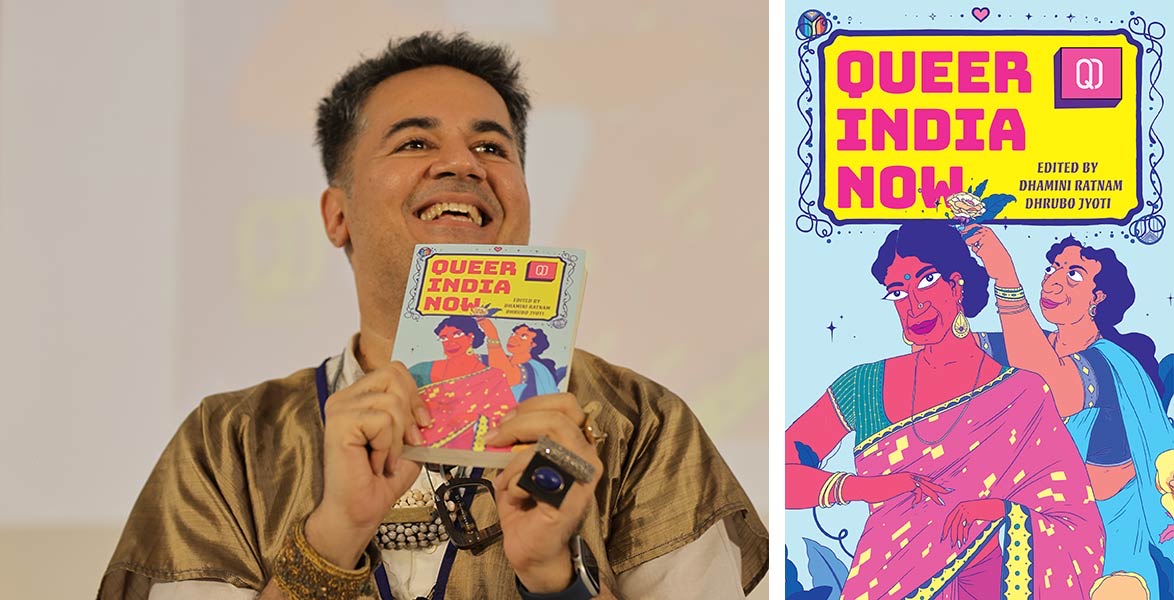
Fashion has long embraced queer aesthetics. Parmesh Shahani asks whether it is finally ready to embrace queer rights with equal conviction
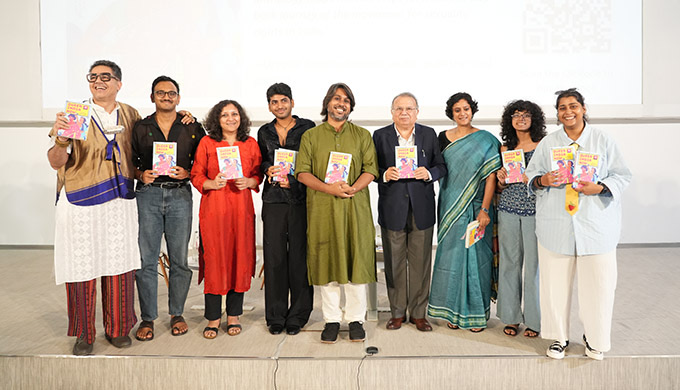
Less than two weeks back, Westland launched an anthology titled Queer India Now in collaboration with Godrej DEI Lab. This book is part of Queer Directions, a new imprint with Parmesh Shahani as its series editor. Edited by Dhamini Ratnam and Dhrubo Jyoti, Queer Directions inflects towards community and belongingness as a culture. It builds the idea through viscerally vibrant subjects—intellect, pain, shame, bedrooms, boardrooms, drag identities, ageing, eroticism, sex, even songs. A lot more.
This interview with Shahani, head of the Godrej DEI Lab, is not just about the anthology. It sparks from there and moves into fashion territory, given Shahani’s background as a fashion editor. Fashion often mistakes symbolism for social change and that’s the spine of this feature. Shahani speaks about an international fashion house bringing in money for the welfare, education of the LGBTQIA+ community while Indian brands and designers continue to baulk at the idea. He argues against the now-and-then visibility of queer communities in fashion campaigns especially during the Pride Month, and the absence of actual infrastructural changes. He speaks against tokenism in the absence of long-term funding and commitments. The distance between performance and ethics comes out in this conversation, between what institutions display and what they actually do.
Excerpts from an email interview, edited for length and clarity.
Given your move from fashion to culture, not only as a queer writer and speaker but also an inclusivity advocate, it is worth asking why did fashion become intellectually narrow for you?
Yes, fashion can do so much more, and be so much more. We see examples of that in other parts of the world. Like with what the Fondation Chanel is doing to empower women and girls or what the Loewe Craft Prize is doing for artisans globally, to cite just two examples. But in India, fashion as it exists, has been extremely limiting to my vision of creating a more equitable and meaningful world. Book writing was always there, so Gay Bombay (2008) and Queeristan (2020) happened. But professionally, I feel extremely grateful to have jumped ship to the corporate world, and that too, with a company like Godrej. A lot of what we did even in terms of our fashion collaborations then—such as catwalk interventions during Lakmē Fashion Week with documentary screenings of films on weaving through textiles and the poetry of Kabir, or pop-ups on the Godrej campus, like the three-day Partition Museum—aren’t being done today, even ten years later. Indian fashion, while it has always championed inclusion editorially, has become so limited in its imagination of how to advance it beyond the content universe. Do we really need one more hotel function where influencers pose on the carpet outside and celebs waltz in for five minutes to receive an “award”?
The Queer Directions imprint is just one of the experiments we are running. This year, the Godrej DEI Lab is also launching the ambitious Godrej Queer India Fellowship to create a new generation of LGBTQIA leaders from the country. We also produce podcasts and short films, conduct case study contests on college campuses across the country to take our message of inclusion far and wide.
Fashion asserts gender and gay rights through dress, spectacle, runway embrace of queer identities, but seems to switch off when it comes to taking a stand against the violence and indignity of the community. Besides tokenism and hypocrisy, could there be something deeper in this? Fear?
Absolutely, and you have used the correct word—hypocrisy! Look, the fear I totally understand. If people want to comment or not comment on issues, it is completely up to them. I prefer to look at people’s actions and not their social media commentary, and it is here that I find there is so much that is hypocritical. First of all, most people in fashion don’t even take the time to learn about the basic laws of the land—what was section 377, what was the 2018 judgement that decriminalised homosexuality, what was the 2019 Trans Act, and what has the recent amendment done in the context of that Act.
Most people don’t bother about basic knowledge as the most fundamental form of allyship to the queer community. Instead, they choose what you rightly call tokenism. I know of brands who do rainbow campaigns on Instagram and don’t have even one queer employee. Or, media publications who do LGBTQIA+ focussed stories during Pride Month, but don’t offer same-sex partnership healthcare benefits to their queer employees. Or protect them from discrimination, offer to serve as guarantors for them to get housing, or even have something basic as an all-gender washroom on their premises. Queer people need jobs and fair treatment, not opportunistic hashtags.
What is completely hypocritical is that fashion wants to do things about us, but not with us. There is absolutely zero focus on working alongside and for the community organisations across this country. If you are celebrating Pride and shooting a video, let the director, creative team and talent be from the queer community. If you want to do a campaign of support, give some of your money to LGBTQIA non-profits that exist all across our nation, from Manipur to Kerala, Gujarat to West Bengal. We recently started Pride Fund India—a collaboration between Godrej, Radhika Piramal, Dasra, the Keshav Suri Foundation and some other donors—to give approximately ₹4 crore of funding every year to 25 queer NGOs in India. But there are around 75 more, who need funding. Why can’t brands step up through their corporate social responsibility programmes?
Has visual opportunism added to the Indian fashion industry’s apparent inability to stay with real causes and concerns? June is Pride Month, October is weddings, February is Valentine’s, then Earth Day, World Environment Day, December is holiday retail. But nothing really sticks. How does this hurt?
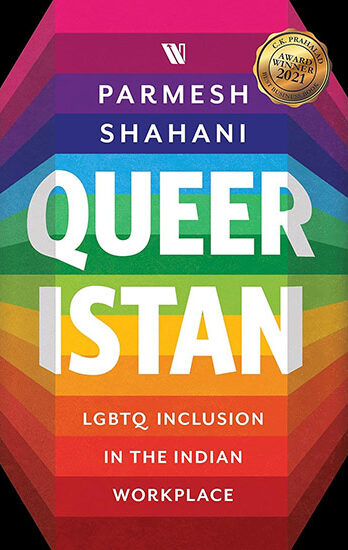
This attitude has hurt not just queer rights but also fashion brands. Consumers are not stupid. They see through fake attempts as much as they recognise genuine intent. It is so short-sighted. In my book Queeristan, I have outlined how India has a LGBTQIA+ market worth $200 billion, lying untapped, and how a decade ago, the World Bank estimated the cost of homophobia in India to be $32 billion. Why would brands not want to tap into a piece of the lucrative queer market all year round?
Start internally. Get your policies right first and sensitise teams. Then, hire queer talent into the team and make them feel welcome. Third, think of queer people as a market: do research on their needs, in terms of products and services. Fourth, show queer people or queer issues in your ads. Starbucks and Ikea have done this well in India in the recent past. Finally, work with queer NGOs and community organisations and support their work. Once all these boxes are ticked, then by all means, go do a campaign for Pride Month, and preferably, all year round, and you will find a lot of support.
Can you talk to us about the choice of the cover for Queer India Now where two individuals, in decorative saris and jewellery are dressing up together; so that we understand why “dressing up” is so important to the queer identity?
The cover is a powerful illustration by Priya Dali, the creative director at Gaysi Family, and a Forbes 30 under 30 honouree this year. It shows many things trans joy, queer solidarity, love, friendship, chosen family and resilience. What does it mean to care for someone so much that you dress up alongside them? What you see on the book cover is a zoomed-in version. The larger work shows the reflection of the individuals in the mirror where they are seeing their own selves. I see this cover and am reminded of two things. One is the first lesbian anthology from India called Facing the Mirror (1999), edited by Ashwini Sukhtankar. In a sense, this cover is an ode to that. What do we queer people look at when we dress up ourselves in the mirror? How do we fashion—our own selves, our identities, and our lives? We wanted the cover to be positive, joyous and assertive. The second thing I am reminded of, is the title of the inaugural exhibit at the Fondazione Dries Van Noten, on right now in Venice—The Only True Protest is Beauty. This cover, like our book, is beautiful, and in its beauty lies its strength and resistance.
What is completely hypocritical is that fashion wants to do things about us, but not with us.
Do international fashion brands and fashion houses respond more meaningfully and with consistent commitment to queer rights and rewrite narratives?
Yes, much more than Indian brands do. Or if Indian brands are doing this for queer rights, I am not seeing it. There is so much to do that goes beyond making gender neutral garments, or having basic representation on the runway. Indian fashion has overall been queer-friendly, don’t get me wrong. It has been lovely, as a queer person, to flourish in an atmosphere that has been mostly non-judgemental. But today, in 2026, mere acceptance isn’t going to cut it. We need structural inclusion of queer people. We have our own histories, our own mythologies, our culture of queer inclusion in India. Wouldn’t it be great if our fashion brands and creators tap into this, while systematically and structurally taking steps for comprehensive inclusion across product, human resources, infrastructure and community-building?