The Voice of Fashion
A border looks like a boundary. In Indian textiles, it can be a beginning—a place where rivers, flowers, birds and architecture enter the grammar of cloth. This is where the temple border took me
The word “border” had been staring back at me from stories and films about the Partition of India. With Independence Day approaching, it acquired another charge. It set off the usual chain of metaphors in my head. Borders as laces, frames, edges, thresholds; lines that separate one thing from another. Sometimes more intriguingly, how they invite, blend or blur one thing into another.
I began wondering how to write about borders in Indian textiles, and set out, rather excitedly, hoping to find a “beautiful” story in the woven edges of Indian handlooms. Sometimes just simple selvedge as border to gigantic gold temple motifs on Kanjeevarams.
It turned out to be an absurdly overwhelming proposition. Caves appeared, both in my mind and research. As did rudraksh beads, rivers, temples, rock formations, huts, hills, flowers, birds and an astonishing vocabulary of the natural and constructed world. Indian weaving—as is known—is not merely decorative. It is a vast archive of how we live, what we look at and how that gets carried into cloth by weavers. Every attempt to draw a boundary around the subject, or a border if I were to chide myself, seemed to open another one.
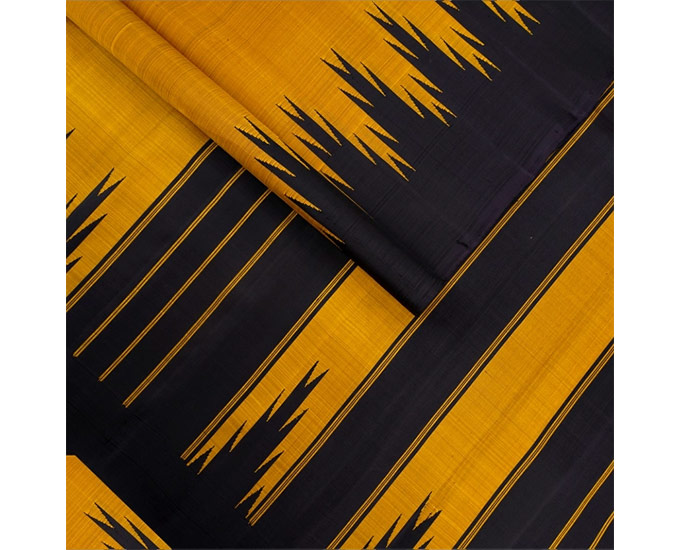
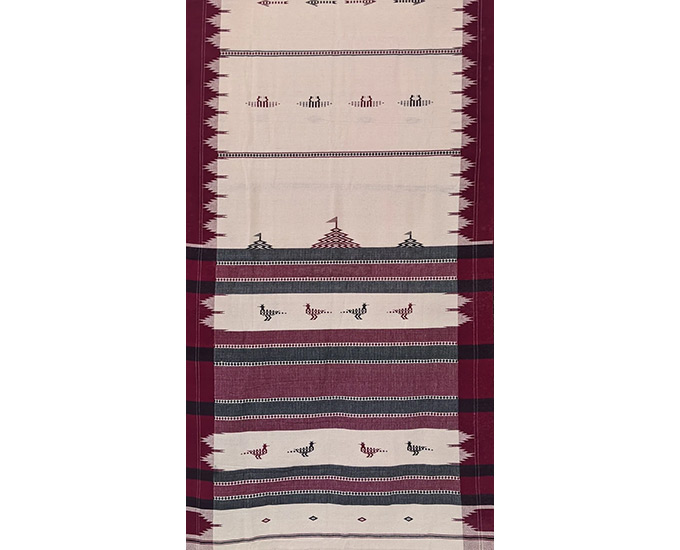
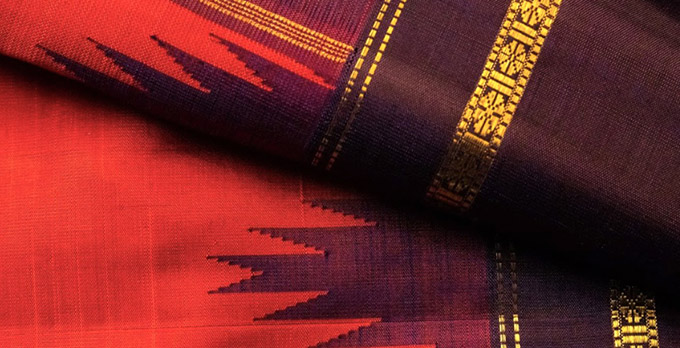
But like a terrier on a trail who refuses to leave without digging a deep hole, I narrowed the question. What if I were to begin with one of the simplest and most recognisable propositions in Indian handlooms: the temple border sari?
Even there, the word “border” is barely an easy idea. The temple form itself has dozens of variations, perhaps more: tall spires, tiny repeated peaks, serrated lines, five rekku, six rekku, saw-like edges. Some were architectural and emphatic; others were so small they seemed almost to whisper the idea of a temple. There were the crisp, bold geometries of Kanjeevaram and the softer, more elusive edges of Ikat. And then there was the matter of how these forms were actually woven, including the three-shuttle traditions that make the border part of the engineering of the textile.
I messaged Rta Kapur Chishti, sari historian and author; the dame of 108 drapes. She came on the phone promptly. I blurted out a list of saris with borders asking her how I could organise my research. Her responses left me even more overwhelmed. A sari border is about the weaving grammar, the weight of the fabric, patterning and skill, she said, explaining why saris with the right border thickness and three-shuttle weaving never need falls.
That was when this stopped being a story I was trying to write and became a subject I wanted to know about.
The last week has gone into poring over textile books, chasing terminology, looking closely at borders I thought I knew and discovering how little I actually knew about them. Once I began looking, the temple border was everywhere but it was never quite the same.
In my own sari collection, I have temple borders in Gadwal, Ilkal and Kanjeevarams, where the temples change in length, thickness and material. They are a little library unto themselves.
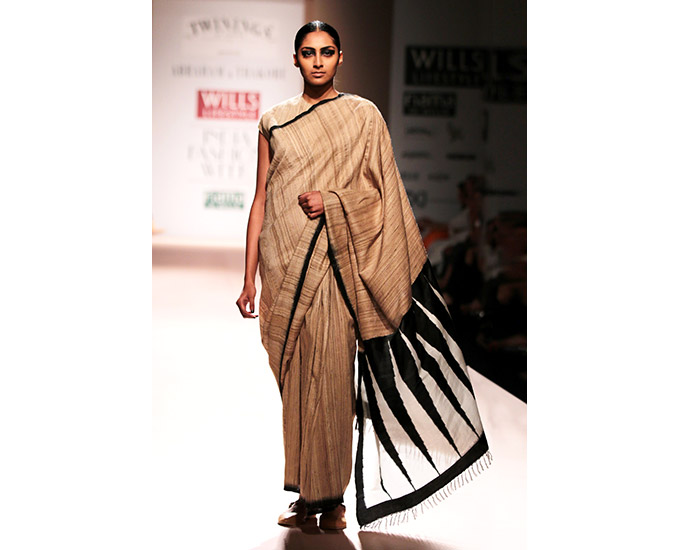
Saris woven in Odisha open another pilgrimage into temple borders. Tribal Kotapads too have triangular temple patterning as do the multi-patterned, contrast bordered Bomkais. Regional changes vary in structure and thickness. From Tamil Nadu’s Gopurams on a pattu/silk sari found commonly at Nalli or other sari stores of South India to the old-is-gold temple saris at Co-Optex, and from there to A&T’s contemporary handwoven tussars with double Ikat temple motifs in black and white—it is a formidable terrain. Temples, tall or small, change shape, scale, rhythm and character as they enter different weaving vocabularies.
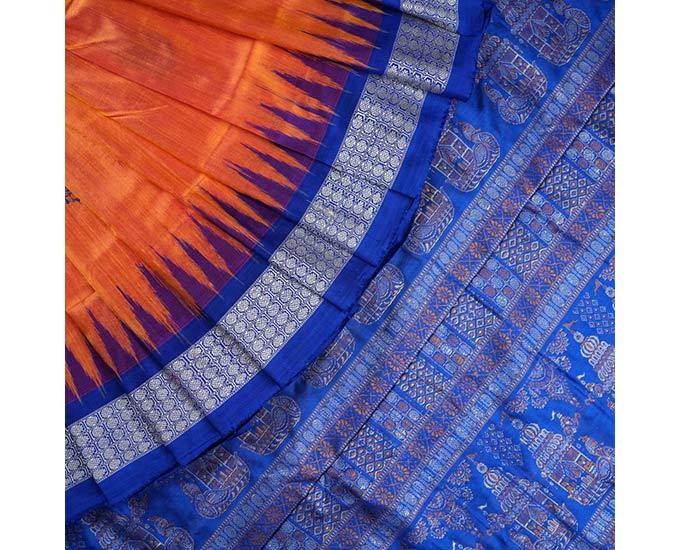
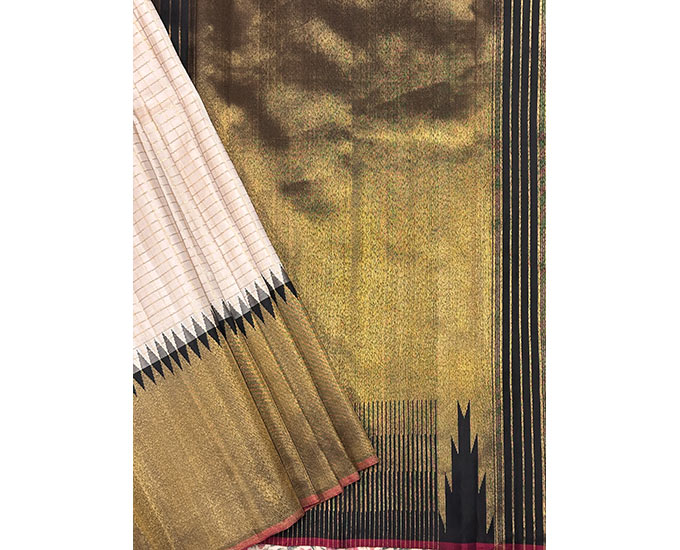
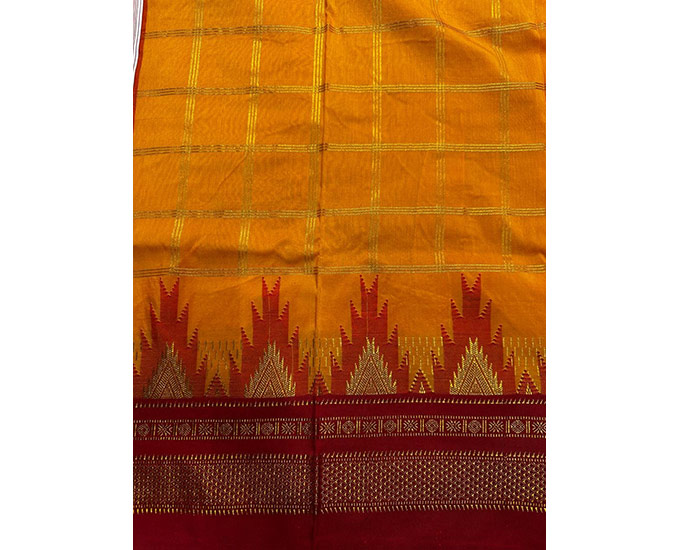
Here is a small list I want to leave you with. The categories are not from any sari-history textbook. I have named them according to how a particular temple border appeared to me, borrowing where I could from existing handloom vocabulary.
The Temple as Tall or Short Spire: Kanjeevaram, Gopuram, Temple rekku
The Temple as Miniature Peaks: Found also in Gadwal and several three-shuttle woven saris from Tamil Nadu, Andhra Pradesh, and other regions.
The Temple as a Robust Triangle: Kotapad saris worn by the tribal communities of South Odisha are my top favourites here.
The Temple Has Teeth: Ganjam district from Odisha has these saris. In fact, Chishti’s book Saris: Tradition and Beyond edited by Martand Singh names them as Kumbh Naksho Daanti (tooth) saarhi.
The Temple as Serrated Skyline: I would place one of the Bomkai variations here, as well as the saris for deities woven in Nayagarh district of Odisha, as Chishti has documented.
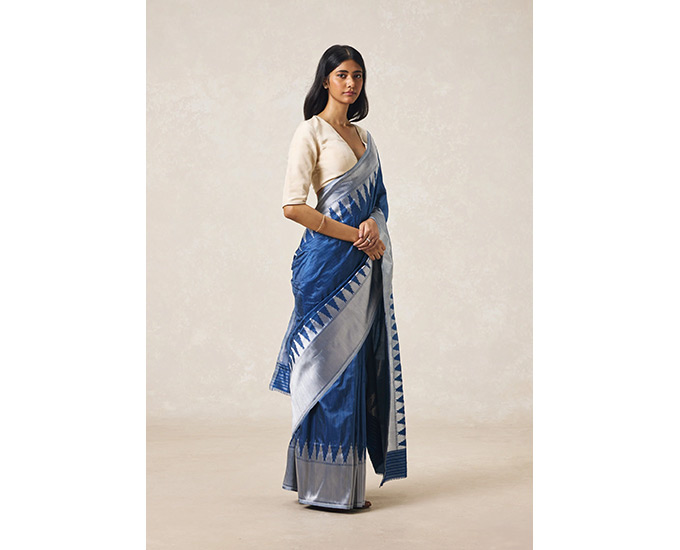
The Temple as a Join: Ilkals woven in Tope-teni style! Easy right? Not quite. Body and border contrast colours interlocked in temple forms on pallus only. These are also present in some Korvai saris, including those once woven in Kalakshetra in Chennai show temples on pallus not extended from the border. The Rukmini Devi collection (being catalogued and prepared for an exhibition in the future) has some stunning examples. It’s a three-shuttle weave, as Chishti tells us.
The Temple Wears Rudraksh: The Kanchipuram weaving districts have several forms running parallel to temple spires—woven rudraksh beads are just one. Listing the variations in skilled renditions is far more complicated than counting beads on a rosary.
Temples as Checkmates: We are arguing for the Chettinad saris with temple borders that offer another layer of geometry, by entering into the checked fields of the sari. They can look deceptively like cotton Kanjeevarams, with peacocks, elephants and flowers on the border as well as tiny temple peaks running across. Who is to say India’s sari grammar can be understood through a multi-choice questionnaire?
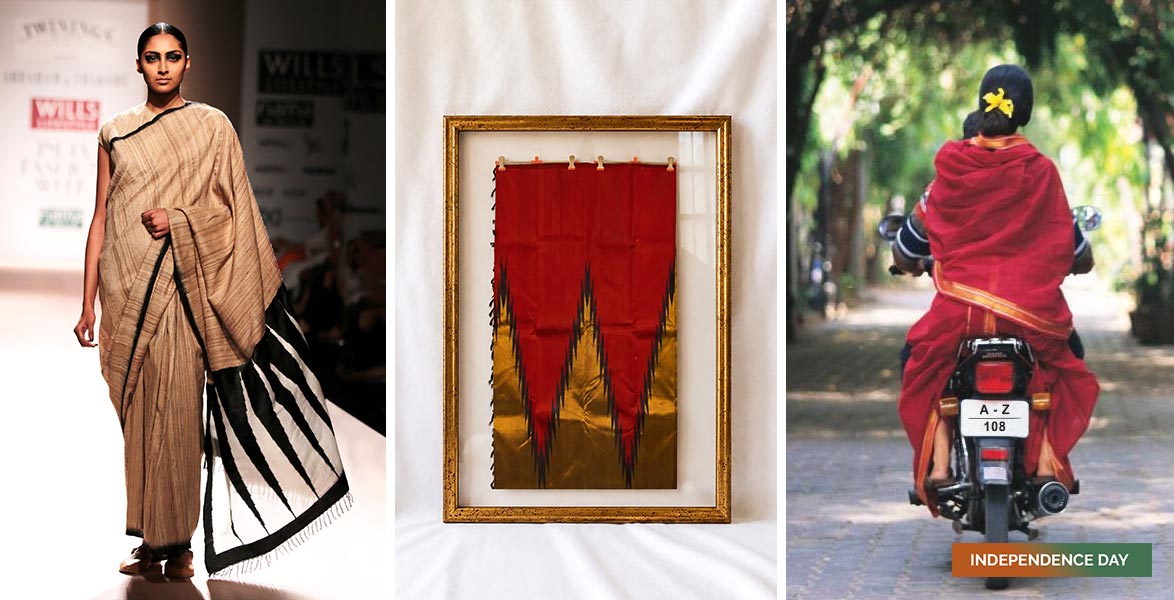
The Modern Temple: Tussar weaves from Andhra Pradesh with tall Ikat temples by Abraham & Thakore might be the most riveting contemporary interpretation of temple borders in India. The only competition they have is from their own handwoven tussar silks that simulate temple motifs.
And so, after a week of digging, reading and bothering textile historians, I found myself crossing the border on my own. Perhaps that is what a border does best. It looks like an ending. But it seldom is. It is an invitation to move from one field to another.
Banner: A handwoven tussar silk sari by Abraham & Thakore, Charita temple-border Kanchipuram sari by Aavaranaa, the cover of ‘Saris: Tradition and Beyond’ by Rta Kapur Chishti and a Bomkai sari from Odisha.