The Voice of Fashion
What looks like maximalism by Sabyasachi Mukherjee is, in fact, an exercise in imaginative control
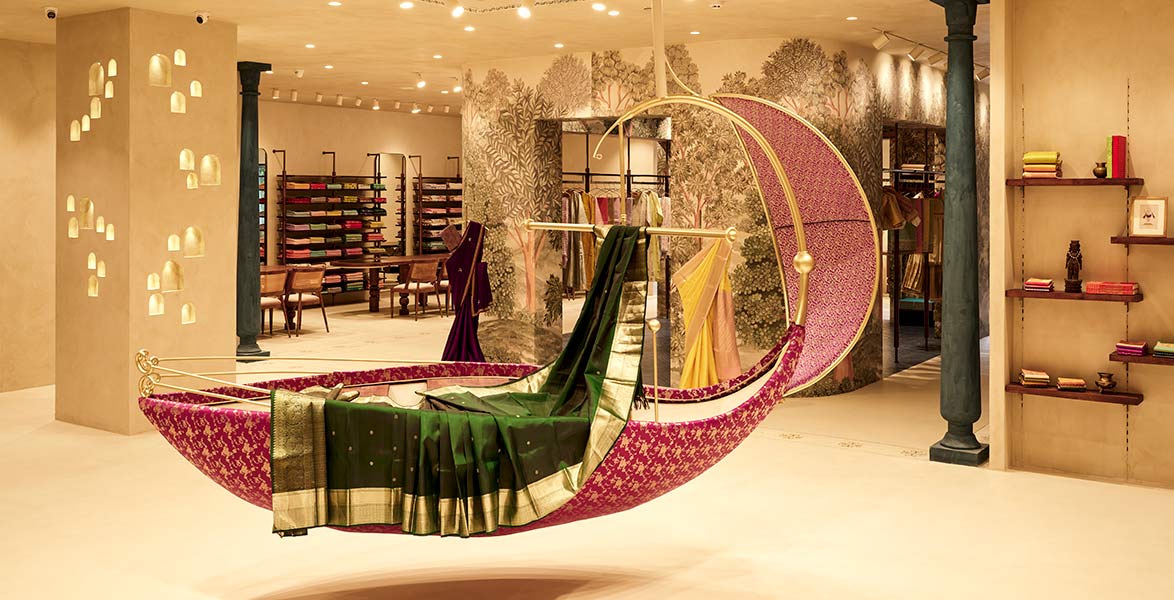
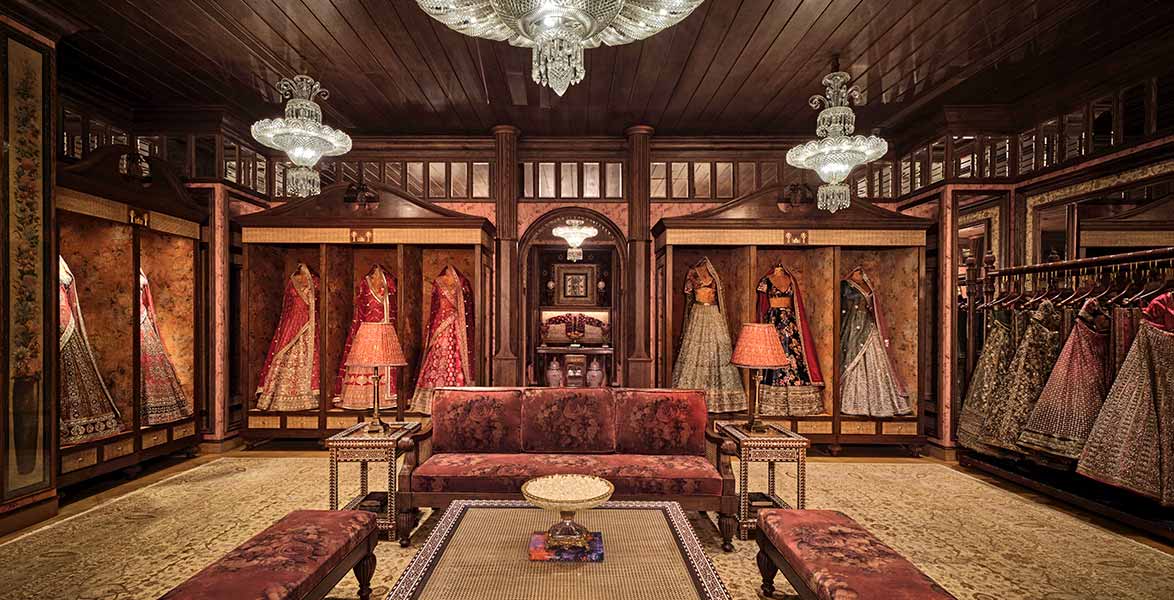
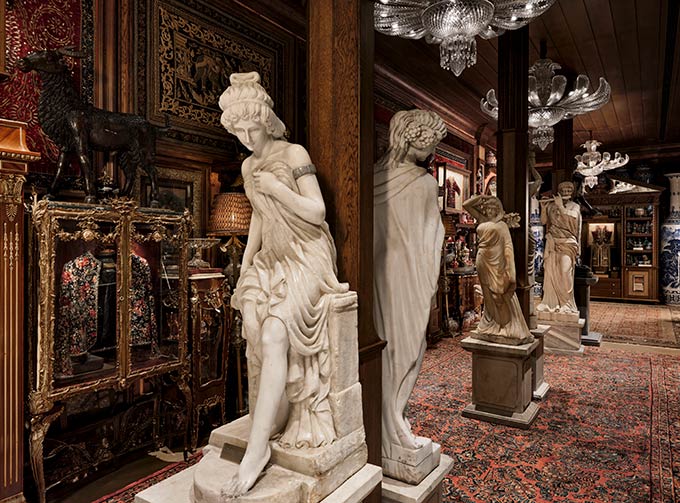
Yesterday, designer-couturier-jewellery maker, Sabyasachi Mukherjee opened his new store in Delhi. Spread across 26,000 square feet, it is his largest yet in India. It has approximately 120 chandeliers, hundreds of artworks, antique carpets, textiles, mirrors and decorative objects. There are rooms that seem to belong to another century. Indian memory and European antiques, Bengal and Byzantium, textiles and jewellery, old furniture, paintings, carpets, porcelain, sculpture, glass and all the visual debris of a life spent searching.
No detail is new in terms of how the bard of Calcutta’s culture stacks and stocks stores. But everything matters to build up to what I am trying to say here.
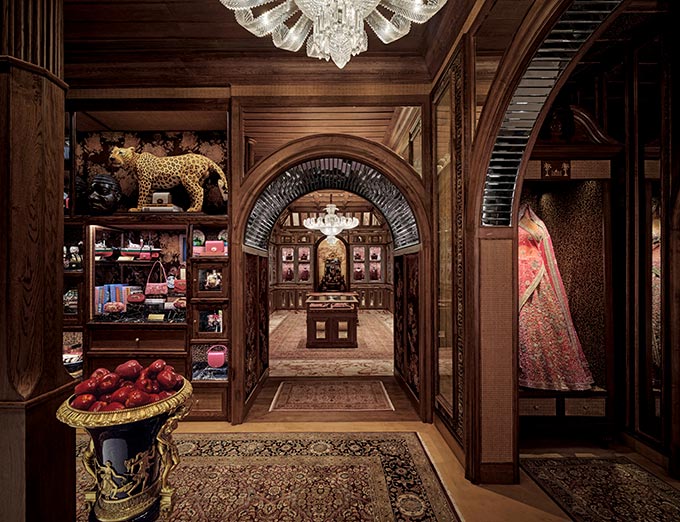
Over the years as Sabyasachi designed and redesigned his stores, adding spaces and retail categories along with collaborative creations (the newest being jewellery with MET Museum, New York), his visual language, obsession with oldness, pastness and his ability to turn nostalgia into desire became the stuff of writing. It is hard to write a piece if you can’t breathe between the description of the objects that are the designer’s subjects. The tiger on the prowl in these rooms is not only the wild cat of Bengal that Sabyasachi is so intensely fond of but the problem of making sense of “more”.
More colour. More objects. More history. More ornament. More references. More craft. More things to see.
Instagram is already flushed with the Sabyasachi “muchness”.
Yesterday at the store opening, however, I observed two things that may have escaped me over the years of following Sabyasachi’s work and attempting to understand some of it.
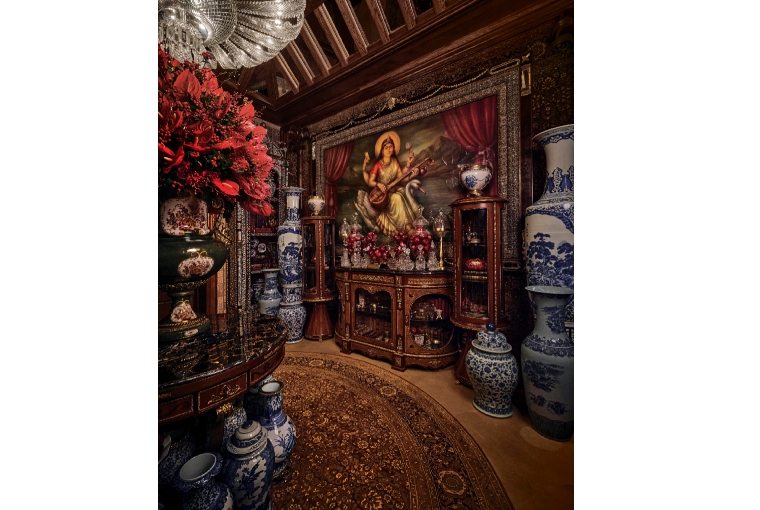
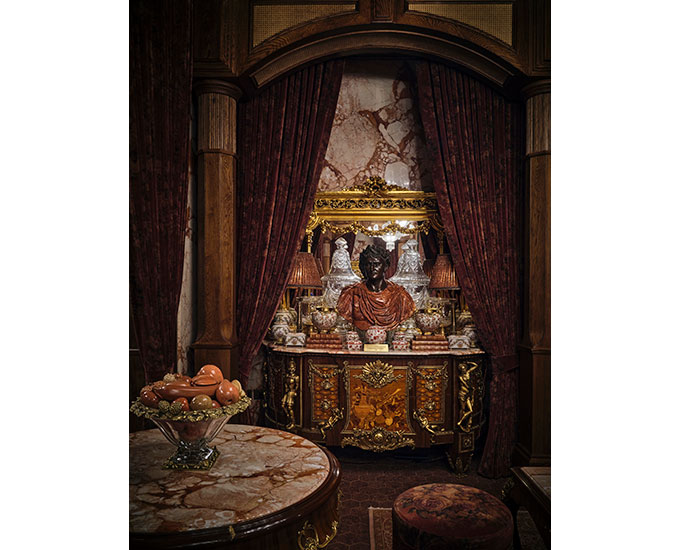
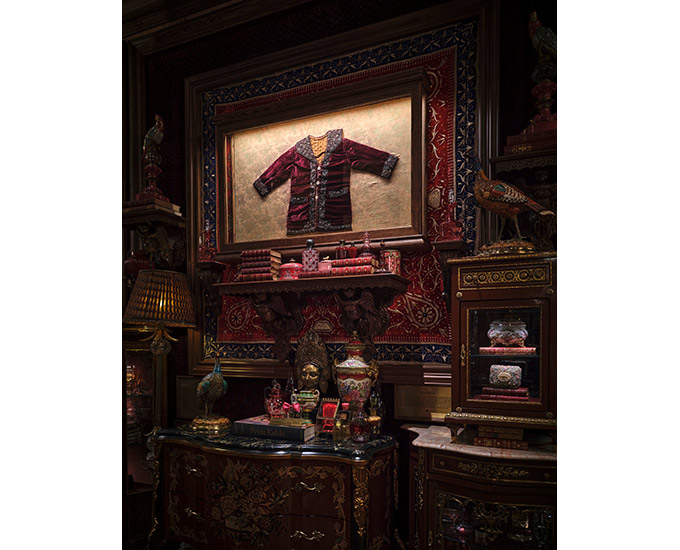
What struck me for the first time was a sense of control in the curation of these museum-like stores. Look closely and nothing is chaotic. They are crowded with objects, but they are not confused. There is repetition and symmetry in the placing of objects. Even balance. Lamps are separated by a certain distance and they appear again. As do chandeliers. Furniture is placed with deliberation. Paintings are given their own visual territories before other things are placed to surround them. Goddess Saraswati’s presence on a large artwork is not merely artistic; it is metaphoric. The objects are props. The room is the performance. The clothes are the protagonists.
And Sabyasachi is the director. He is not just directing what’s known as immersive retail in luxury but also our attention.
Each corridor leads the eye to somewhere else. Every room reveals another. There is clear choreography. While the designer amusingly told his guests yesterday that one gallery inside his store resembled the bustle of Kolkata’s New Market, or Hogg Market, I found myself disagreeing after walking down it. Because of the clever use of imaginative control that no market can absorb.
I had only one question for Sabyasachi. “How do you respond to a space that has nothing on it, is blank, without any colour, decoration or ornamentation? How does emptiness make you feel?”
His answer was like a reflex. Before blinking or breathing, he said “You are talking about my bedroom in my home in Kolkata.” It is bare. There is nothing on the walls. Nothing anywhere in it.
The next question didn’t need to be asked.
“All this is my armour, my mask, my makeup, my theatre. This is not me. I am a minimalist at heart; a maximalist as a creator.”
It’s then that the imaginative control of his stores, or the carefully constructed performance of muchness, made sense to me. He knows exactly when to add, where to add, what to put beside something else and, importantly, what he wants the eye to encounter next. He gathers fragments from different times and places and allows them to speak to each other. The remarkable thing is that he can make all these fragments belong to his universe.
Which is why, after walking through 26,000 square feet of Sabyasachi, I keep thinking about his room in Kolkata that he described to me with nothing on the walls.
Banner: Sabyasachi Mukherjee’s new store in Delhi.